





Former Facebook policy executive Sarah Wynn-Williams is suing Meta Platforms in federal court to overturn an action the company brought to prevent her from promoting Careless People (Flatiron, 2025), her memoir about wrongdoing by executives at the company, the Wall Street Journal reports. Just after the book was published in March of last year, an arbitrator ruled that Wynn-Williams could not make critical comments about Mark Zuckerberg or other employees of the company because Meta alleged that doing so would violate the non-disclosure agreement she signed when she was fired in 2017. Careless People has sold more than 130,000 print copies to date in the U.S., but the order remains in effect. Wynn-Williams says she has had to forgo appearance and speaking opportunities; Last month, she sat silently on stage at the Hay Festival, a non-speaking panelist at an event on digital technology and public policy. Wynn-Williams’ lawsuit also claims that she had to sign Meta’s severance agreement in order for the company to reimburse hundreds of thousands of dollars of preapproved business expenses, of which Meta ultimately reimbursed only a fraction. “This former employee is trying to use the legal process to sell books, which an arbitrator already ruled broke the agreement she signed with the company when she accepted a large financial settlement years ago,” Meta spokesman Andy Stone said in a statement.
Writing Prompts
-
In “The Tally,” an essay by Anne Enright recently published in the New Yorker, the...
-
As climate collapse transforms our experiences of the natural world, researchers are sounding the...
-
In an interview for the Poetry Society of America, Diane Seuss talks to Jennifer Franklin about...
Tools for writers
Daily News
Agent Annie Hwang is launching a new agency representing literary fiction authors and established poets called Renegade Literary, according to Publishers Weekly. Hwang has been an agent at Ayesha Pande Literary since 2020, and before that was at Folio Literary Management. Her authors include John Paul Brammer, Franny Choi, Lilly Dancyger, and more. “I’ve spent my career selling the kinds of books that needed to exist on their own terms—through that work I realized I also wanted to build the kind of agency that could be a dedicated home for them,” Hwang said in a statement.
Earlier this month, the Massachusetts House passed a bill designed to give school librarians authority over what’s on their shelves, and thus shield libraries from book bans, the Associated Press reports. The bill stipulates that library materials be age-appropriate, serve an educational purpose, and be chosen by professionals who set aside personal or political views, and also requires that every school in the state adopt a library policy that outlines how to handle book challenges. This bill comes on the heels of the revelation that in 2025 the state ranked fourth in the nation for attempts to ban books. Librarians “are hired based on their background and training,” state representative Mark Sylvia said. “It’s important to ensure that you’re protecting the professional integrity of a process, and that includes indemnifying the people that make those decisions using those qualifications.”
The Community of Literary Magazines & Presses (CLMP) has announced the winners of its twelfth annual Firecracker Awards. The awards are given to the best independently published books of fiction, creative nonfiction, and poetry and the best literary magazines in the categories of debut and general excellence. Each winner in the book categories receives $2,000—$1,000 each for the press and the author—and the magazine winners also each receive $1,000. This year’s fiction book winner is Blood Work and Other Stories by Donald A. Carreira Ching, published by Bamboo Ridge Press; the winner for creative nonfiction is Governing Bodies: A Memoir, A Confluence, A Watershed by Sangamithra Iyer, published by Milkweed Editions; and the winner for poetry is The Choreic Period: Poems by Latif Askia Ba, published by Milkweed Editions. The best debut magazine is Elastic, and the best magazine in the category of general excellence is Oxford American.
The London Book Fair announced today that its 2027 event will collaborate with this Japanese Book Publishers Association (JBPA) to feature the Japanese book business as part of its Market Focus program, Publishers Weekly writes. Thanks in large part to its manga and translated literature exports, lately the country has been dominating foreign book sales. “In recent years, Japanese authors have gained increasing recognition in the U.K. market, and building on this momentum, we are excited to introduce an even broader and more diverse range of Japanese publishing genres and storytelling, showcasing a wide variety of publishers and titles,” Yoshiaki Yoshino, international affairs and promotion manager at the JBPA, said. “We are very much looking forward to building new connections and strengthening relationships with colleagues from across the international publishing community.”
Newbery Medal winner Kwame Alexander is starting a new imprint, Kwame Alexander Books, at SourceBooks, the New York Times reports. Its first title will be the fourth book in Alexander’s Crossover series, the first three of which have sold more than two million copies and been adapted into an Emmy Award-winning TV series for Disney. Alexander also has ample experience as a publisher—in 2018 he started a children’s imprint called Versify at Houghton Mifflin Harcourt, which has published more than fifty titles. Alexander’s new imprint will focus on publishing works by writers from historically underrepresented communities, especially given that many of the titles targeted by book bans in recent years have features LGBTQ characters and people of color. “The more books we can bring into this space, the better,” Jennifer Gonzalez, the publishing director at Sourcebooks, said. “Hopefully, there’s a day where we don’t have to worry about book bans, but it’s not going to stop us from publishing great books and authors and illustrators, and we’re committed to bringing those voices to the wider population.”
The Independent Publishers Caucus has released the Independent Press Top 40 best-seller list for the week ending June 21, 2026. The list is compiled in partnership with the American Booksellers Association and identifies “the top titles from independent presses as represented at independent bookstores across the U.S.” New to the list this week are Stoner (NYRB Classics) by John Williams, at no. 12; At the Edge of the Woods (Two Dollar Radio) by Kathryn Bromwich, at no. 13; and Caught Up (Slowburn) by Navessa Allen, at no. 40.
The A.I. voice generation platform ElevenLabs has created a new audiobook edition of the Odyssey using the voice of the actor Michael Caine, according to the New York Times. Caine licensed his voice to the company, which a team of four producers then used to created the audiobook, which also includes twenty different A.I. voices as well as A.I.-generated sound effects and a musical score. “The idea was, What would be an amazing piece of content, to show what’s possible in the responsible use of A.I. voice featuring an iconic voice?” Jack McDermott, head of mobile growth and marketing at ElevenLabs, said. “On the one hand, it’s about great storytelling. At the same time, this has a really great effect of showing creators around the world, and authors, what can be done with ElevenReader.”
Ann Patchett has been named the winner of the 2026 Library of Congress Prize for American Fiction. The annual prize honors an American writer whose “body of work is distinguished by its mastery of the art, as well as its originality of thought and imagination.” Patchett is the author of ten novels, most recently& Whistler (Harper, 2026), as well as nonfiction and children’s books. She is also the owner of Parnassus Books in Nashville, Tennessee, and an advocate for independent bookstores. She will receive her award at the National Book Festival on August 22.
Ingram Library Services and Penguin Random House will be joining forces on a print-on-demand program that will supply libraries with popular backlist titles, Publishers Weekly reports. The program includes 200 titles across all genres, and the hope is that other publishers will eventually participate as well. “The beauty of print-on-demand,” Carolyn Morris, vice president of ILS, said, “is that we can have all of these books available for order, we can manufacture and ship them the same day, and we can do that without having to allocate valuable shelf space or inventory dollars, which makes it low-risk to offer this breadth of library titles.”
The Commonwealth Short Story Prize has announced that an internal investigation found that no AI was used to write this year’s regional winners’ stories. “We held detailed discussions with all regional winners about their creative process, and they collaborated fully in our review. We also examined evidence related to the development of their stories, including working drafts, time-stamped documents and notes,” the organization said in a statement. “After a thorough consultation with our judges and careful consideration of all available information, we are satisfied that AI was not used to write the winning stories.” The overall winner of this year’s prize will be announced on June 30. The organization also added that conversations about using AI checkers going forward are underway.
As outlets publishing book reviews dwindle, Porter Square Books in Cambridge, Massachusetts, has presented an alternative by taking matters into its own hands and launching its own literary outlet, Nieman Reports writes. The publication, the Porter Square Review of Books, consists of weekly(ish) book reviews written by booksellers and writers-in-residence and published on the store’s website each week. A lack of books coverage, including book reviews, “hurts everyone in the books ecosystem: readers, writers, publishers, and, of course, bookstores,” the store said in its Porter Square Review of Books announcement. “Putting that in the context of contemporary attacks on the rewards and pleasures of deep thinking and imaginative creating only makes things more dire. Well, we’re not just going to complain about it!”
The e-book platform Rakuten Kobo had to reject 45 percent of the titles submitted to its platform last year because so many were AI-generated books, according to the Bookseller. The platform has said that it now regularly screens books for AI use and removes them from its catalogue when necessary, and is in the process of testing new AI-detection software to further refine its processes. “There has been a steady, sustained rise in more and more AI-generated content,” chief executive Michael Tamblyn said. “We would see a publisher that we had never heard of before show up with a thousand books. And we could tell that it wasn’t actually a publisher, but three LLMs in a trench coat.”
Over a hundred authors who opted out of the Bartz v. Anthropic settlement last year have filed their own lawsuit against Anthropic for copyright infringement, Publishers Lunch writes. In the suit, they say that Anthropic illegally downloaded and torrented their books from pirate websites and ask for statutory damages of up to $150,000 per work. The plaintiffs also assert in their suit that they “did not discover, and could not have reasonably discovered, that their specific works were included in Anthropic’s private, internal database” until “November 24, 2025, when the direct notice to class members was completed and/or their claims were tolled pending the approval of the settlement of Bartz, or February 9, 2026, the deadline for opting out of the class action.”
Lee Boudreaux, vice president and executive editor of Doubleday, has been named the winner of this year’s Medal for Editorial Excellence from the Center for Fiction, Publishers Weekly reports. Boudreaux has worked with authors including Margaret Atwood, Percival Everett, and Curtis Sittenfeld, and has edited books that have won or been nominated for the Pulitzer Prize, the National Book Award, the Booker Prize, and more. “Anyone who’s ever received a bolded sixteen-point type email from Lee festooned with multiple exclamation points, or heard her pitch a book with her honey-laden Southern accent turned up to eleven, understands why her exuberant advocacy has propelled so many of the novels she has edited to outsized success,” Bill Thomas, publisher and editor-in-chief at Doubleday, is quoted saying.
The literary magazine Granta has announced that it will no longer participate in “external publishing partnerships” where it doesn’t have editorial oversight, according to the Guardian. This decision was made following controversy surrounding this year’s Commonwealth short story prize, one of whose winners was widely accused of having used AI after his story was published in the magazine. “We will keep the Commonwealth prize shortlisted stories on our website in the public interest, and wish our former partner, the Commonwealth Foundation, all the best in its work,” Granta said in a statement.
The Green Book Alliance has launched its GBA Book Carbon Calculator, Publishers Weekly reports. The free, web-based tool is meant to help publishers and other organizations in the book industry measure and understand their carbon footprint. Users can assess the carbon footprint of an individual book, plan and track organizational sustainability progress, and make lower-impact decisions around production. “Editors and publishers can also use the calculator during planning stages to understand how different production choices may affect a book’s environmental impact,” Jarin Pintana, the project manager who oversaw the development of the calculator, said.
Google Play Books has announced that it will launch a generative AI in-book chatbot, which they call a “reading companion,” according to Publishers Lunch. The tool will provide readers with recaps or give them the option to ask questions about the text. As of July 6, it will be automatically enabled for most English-language books. Users will be able to opt out if they wish, and authors and publishers will also be able to opt out in the future. Google notes that “only users who have an entitlement to the book (purchase, rental) are able to use Book Insights.”
The Independent Publishers Caucus has released the Independent Press Top 40 best-seller list for the week ending June 14, 2026. The list is compiled in partnership with the American Booksellers Association and identifies “the top titles from independent presses as represented at independent bookstores across the U.S.” New to the list this week are Harvest Season (The Seasons of Carnage Trilogy #2) (Slowburn) by Brynne Weaver, at no. 2, and Earth 7 (Graywolf Press) by Deb Olin Unferth, at no. 25.
The Dayton Literary Peace Prize—the only international literary peace prize awarded in the United States—has announced its 2026 finalists. The finalists in nonfiction are By the Second Spring (Farrar, Straus and Giroux) by Danielle Leavitt, Free (Grand Central Publishing) by Amanda Knox, Mother Emanuel (Crown) by Kevin Sack, Original Sins (One World) by Eve L. Ewing, The Jailhouse Lawyer (Penguin Press) by Calvin Duncan and Sophie Cull, and The Prosecutor (Crown) by Jack Fairweather. The finalists in fiction are Bad Bad Girl (Knopf) by Gish Jen, Outside Women (University Press of Kentucky) by Roohi Choudhry, The Antidote (Knopf) by Karen Russell, The Sunflower Boys (Harper Collins) by Sam Wachman, Too Soon (Avid Reader Press) by Betty Shamieh, and Wild Dark Shore (Flatiron Books) by Charlotte McConaghy. In addition, Ann Patchett was named the winner of the Ambassador Richard C. Holbrooke Distinguished Achievement Award for a writer whose work fosters peace, social justice, and global understanding. “If you wait to find a way to bring peace to the world there’s a good chance that nothing will be accomplished. Instead, I recommend bringing about peace in any small way that is available to you. Live as peacefully and as generously as possible,” Patchett said upon receiving the honor.
Literary Events Calendar
- June 29, 2026
Open Mic Night: Pride Edition
Folio: The Seattle Athenaeum5:00 PM - 8:30 PM - June 30, 2026
An Evening with Lisa Johnston Hancock: Stars and Stories
The Haunted Book Shop5:30 PM - 7:00 PM - June 30, 2026
Book Launch: Names Have Been Changed by Yu-Mei Balasingamchow
Footlight Club7:00 PM - 8:00 PM
Readings & Workshops

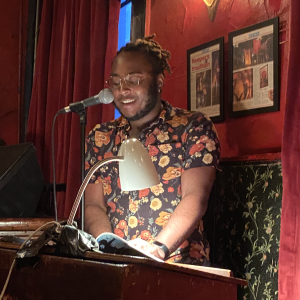
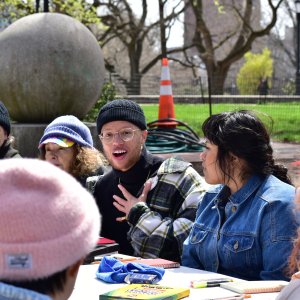
Poets & Writers Theater
Most Recent Items

Classifieds
Writing contests, conferences, workshops, editing services, and more.
Jobs for Writers
Search for jobs in education, publishing, the arts, and more.