




New Ways of Seeing: Our Twenty-First Annual Look at Debut Poets
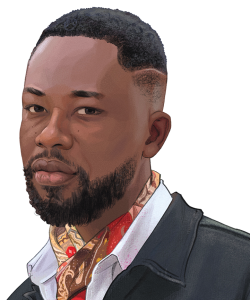
Ten debut poets, including Gbenga Adesina and Kalehua Kim, share the inspiration, advice, and writers block remedies that have sustained their literary practices.
Tags:
Jump to navigation Skip to content
Articles from Poet & Writers Magazine include material from the print edition plus exclusive online-only material.
Ten debut poets, including Gbenga Adesina and Kalehua Kim, share the inspiration, advice, and writers block remedies that have sustained their literary practices.

The celebrated writer shows how science fiction’s “novums”—the futuristic or fantastical developments a writer invents in their work—can delve into philosophical questions, explore contemporary issues, and help us see worlds that are not yet real.

The best historical fiction “vibrates with a past that is in the present” and reveals the unseen in stories thought we knew—craft skills any writer can bring to their work.

The author of Winter Counts offers a masterclass in building suspense, whether your character is planning a heist or planting a garden.

Fairy tales are built on their own enchanting associative logic. A maestro of magical realism explores what writers can unlock when they let readers leap between a story’s plot points—and where such a trail of breadcrumbs can lead.

The award-winning writer studies how the most powerful horror stories are grounded in “deeply human dilemma,” and how daring the ghoulish can bring us closer to our characters.

Five acclaimed writers traverse the literary landscape, gleaning lessons from diverse genres of writing and bringing them back to bear on any work.

Since 2010 we have asked graphic designers and artists to create new, surprising, and uniquely inspiring covers for the first issue of the year; in this portfolio we look back at their work.

The acclaimed fiction writer, essayist, comic book writer, and screenwriter cautions against growing too rigid in your practice and suggests kicking down some doors and using writing as a multi-tool.

Ten authors answer the tenth question in our Ten Questions series: What’s the best piece of writing advice you’ve ever received?

The author of Voice of the Fish: A Lyric Essay (Graywolf Press, 2022) reflects on the ancient origins of the essay form.

This week’s installment of Ten Questions features Djaimilia Pereira de Almeida and Alison Entrekin, the author and the translator of Three Stories of Forgetting.

“You have to learn to write when you don’t feel like it.” —Raquel Gutiérrez, author of Southwest Reconstruction

The author of Ocean of Clouds (Knopf, 2025) considers the lineage of his own loping lines and encourages poets to try them.

“Art is following your soul’s demand.” —Juhea Kim, author of A Love Story From the End of the World

The author of Ocean of Clouds (Knopf, 2025) considers the benefits of planning elements of a poem before its composition.
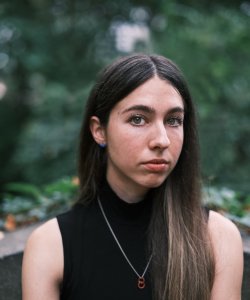
“It can take days, months, years for me to know when notes pass into the arena of poem or story.” —Devon Walker Figueroa, author of Lazarus Species

The author of Ocean of Clouds (Knopf, 2025) reflects on the practice of poetry as one of both composition and listening.

“I’ve learned to be most interested in enjoying the process of making something emotionally true and honest.” —Ashani Surya, author of Ravishing

“I think the creative process is unboundaried.” —Sarah Hall, author of Helm

The author of Bright Fear (Faber & Faber, 2023) and Flèche (Faber & Faber, 2019) explores what it means to write a self that “is in a perpetual state of becoming.”

“How can we reach a higher truth in storytelling and art?” —Brandon Hobson, author of The Devil Is a Southpaw

The author of Bright Fear (Faber & Faber, 2023) and Flèche (Faber & Faber, 2019) considers what it means to estrange a familiar motif in one’s writing.

“At a certain point, you just have to make that shift into the difficulty head-on. You have to hit it.” —Emily Wilson, author of Burnt Mountain

The author of Bright Fear (Faber & Faber, 2023) and Flèche(Faber & Faber, 2019) reflects on how queer traces in literature can open doorways of possibility.