




Ten Questions for Jade Chang

“I think I’m a natural maximalist, and I still enjoy orchestrating a complex, layered scene or sentence, but I often found myself paring down versus building up.” —Jade Chang, author of What a Time to Be Alive
Tags:
Jump to navigation Skip to content
Articles from Poet & Writers Magazine include material from the print edition plus exclusive online-only material.
“I think I’m a natural maximalist, and I still enjoy orchestrating a complex, layered scene or sentence, but I often found myself paring down versus building up.” —Jade Chang, author of What a Time to Be Alive
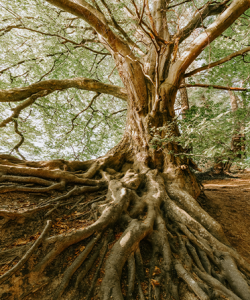
The author of no swaddle (University of Iowa Press, 2025) considers the legacies and influences of authors engaged in similar forms and topics.

“I try to write every day, whether that’s generating new words or taking a walk to think about a revision problem.” —E. Y. Zhao, author of Underspin

The author of no swaddle (University of Iowa Press, 2025) considers the value of both engaging with and refuting a traditional form.

“I wish all writers the audiences they desire and the acclaim they deserve.” —Ashley M. Jones, author of Lullaby for the Grieving
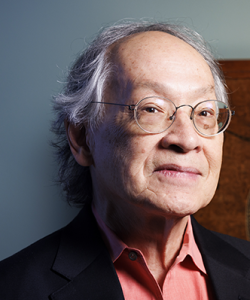
During his term as poet laureate, Sze plans to have a special focus on poetry in translation.

“When an impediment arrives, I try writing about it. This helps me remain patient.” —Jeannie Vanasco, author of A Silent Treatment

The author of Indigo (Copper Canyon Press, 2020) reflects on the lessons Robert Frost offers us when writing about loss.

“Stop telling yourself you can’t do this.” —Patrick Ryan, author of Buckeye

“[Y]ou can’t edit something into being good before getting it down.” —Austyn Wohlers, author of Hothouse Bloom

The author of Indigo (Copper Canyon Press, 2020) recommends writers use coding when trying to describe loss.

Literary and arts organizations are left reeling after budget cuts at the NEA, NEH, and IMLS.

After an unexpected split from her longtime agent, an author reconnects with her sense of calling and remembers who she writes for: herself.

An executive editor at Scribner, previously a senior editor at Grove Atlantic, Katie Raissian talks about learning to be fearless, what grabs her in a query, and the art of publishing books.

A writing degree’s worth lies in early readers met, sacred hours at the desk, life-changing books, and deep community.

Faculty, program type, format, and size are just a few of factors to consider when finding a school that suits who you are as a writer.

An author who worked for years as a scribe at the Harvard Business School shares the lessons she learned that can be applied to writing, most notably: Believe that what you do is valuable.

A novelist explores the craft of imagining a fictional setting based on a real-world location that holds a capacity for convergence, a place where many threads intersect and many stories are born.
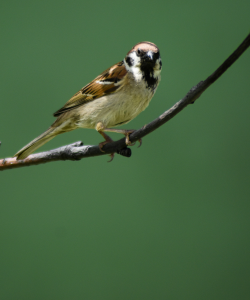
Write a sparrow poem, a story about the loss of self during a period of social upheaval, or a series of vignettes that look back on several past jobs you’ve had.

Essays by debut authors Sarah Aziza, Erika J. Simpson, Julian Brave NoiseCat, Amanda Hess, and Samina Najmi as well as excerpts from their books.

In her third novel, The Loneliness of Sonia and Sunny, which comes out nearly twenty years after her Booker Prize–winning The Inheritance of Loss, Kiran Desai considers loneliness in all its states of loss and heartache, possibility and promise, through the lens of a love story.
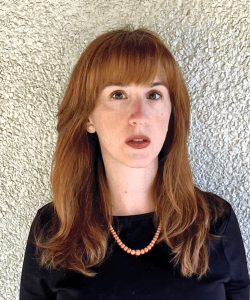
A poet who canceled the contract for her debut collection describes the difficult years-long process of scrubbing the internet of erroneous information about her book.

An agent with twenty years of experience selling foreign rights on both sides of the Atlantic unpacks what can appear to be a complicated and unfamiliar aspect of book publishing.

With Regaining Unconsciousness, her first poetry collection in twelve years, Harryette Mullen sounds an alarm for our uncertain future with a poetics both urgent and playful.