




0s&1s Reinvents E-book Publishing
As a digital publisher and distributor of e-books from small presses like Black Balloon, Curbside Splendor, and Tin House Books, 0s&1s Novels is reinventing how authors are paid for electronic material.
Tags:
Jump to navigation Skip to content
Articles from Poet & Writers Magazine include material from the print edition plus exclusive online-only material.
As a digital publisher and distributor of e-books from small presses like Black Balloon, Curbside Splendor, and Tin House Books, 0s&1s Novels is reinventing how authors are paid for electronic material.

For the first installment of our new column on self-publishing, an indie author details the route he took to self-publishing his novel, while editor Paul Dinas and publicist Corinne Liccketto weigh in with post-publication comments and suggestions.
An agent representing authors such as CJ Hauser and Cecily Wong answers questions about writing in multiple genres, agents’ fees, and publishing work in online journals.
A new digital-first publisher launched in March of this year with the novella Sleep Donation by best-selling author Karen Russell, signaling a new benchmark in digital literature’s continued march toward prominence.

Harry and Lynne Sharon Schwartz revive the Calliope Author Readings, their series of original recordings from the 1960s by novelists James Baldwin, Philip Roth, John Updike, and others in their early careers—by converting the original vinyl recordings to digital.
Mike Joyce, editor in chief of the online journal Literary Orphans, launches the Rookery, a permanent home for recently shuttered literary magazines whose content would otherwise be lost.
Small Press Points highlights the innovation and can-do spirit of independent presses. This issue features Augury Books, an independent poetry press based in New York City that recently expanded to include story collections and nonfiction books to its catalogue.
With so many good books being published every month, some literary titles worth exploring can get lost in the stacks. Page One offers the first lines of a dozen recently released books, including Shane Jones’s Crystal Eaters and Maria Venegas’s Bulletproof Vest, as the starting point for a closer look at these new and noteworthy titles.
Literary MagNet chronicles the start-ups and closures, successes and failures, anniversaries and accolades, changes of editorship and special issues—in short, the news and trends—of literary magazines in America. This issue’s MagNet features Osiris, Two Lines, Hayden’s Ferry Review, the Literary Review, and Stonecutter.

Ron Capps’s Washington, D.C.–based Veterans Writing Project helps military veterans and their families begin to heal through writing workshops around the country.
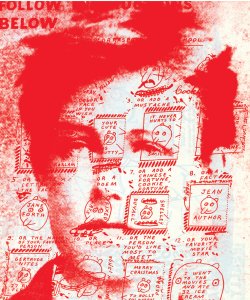
Two forthcoming books from Siglio Press collect the art and writing of Ray Johnson, pop artist and founder of the New York Correspondence School.
The Guardian’s literary editor discusses the newspaper’s new monthly prize for self-published books by writers based in the U.K.
Read exclusive excerpts from the novels and story collections of debut fiction writers Courtney Maum, Scott Cheshire, Celeste Ng, Yelena Akhtiorskaya, and Mira Jacob.

PJ Mark, whose clients include Samantha Hunt, Wayne Koestenbaum, Dinaw Mengestu, Maggie Nelson, Ed Park, and Josh Weil, talks about what writers can do to improve their chances of success, why fiction is harder to sell than nonfiction, and the importance of trusting your heart.
Two editors launch a new digital magazine that explores the business of getting paid to write.
A start-up based in Sao Paulo, Brazil, aims to change the face of digital publishing through a writing-based social media tool.

Susan Golomb, whose clients include Jonathan Franzen, Rachel Kushner, and William T. Vollmann, talks about the ebb and flow of submission season, the art of the preemptive offer, and the gems she finds in her slush pile.

A Danish organization challenges library patrons worldwide to confront prejudices and change perspectives through conversations with “human books.”
A digital publisher reinvents itself as a library of short-form works.
Literary MagNet chronicles the start-ups and closures, successes and failures, anniversaries and accolades, changes of editorship, and special issues—in short, the news and trends—of literary magazines in America. This issue’s MagNet features Glimmer Train, A Public Space, American Short Fiction, NOON, One Story, and One Teen Story.
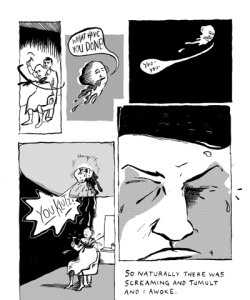
A new graphic memoir by Liana Finck illustrates real letters sent to Abraham Cahan, the late editor of the Yiddish-language newspaper the Forward.
Small Press Points highlights the innovation and can-do spirit of independent presses. This issue features Barrelhouse Books, a newly founded independent press launched by the editors of Barrelhouse magazine.

The executive director of the Academy of American Poets discusses the forthcoming rebranding of its website, poets.org, in celebration of the organization’s eightieth anniversary.
With so many good books being published every month, some literary titles worth exploring can get lost in the stacks. Page One offers the first lines of a dozen recently released books, including Lydia Davis’s Can’t and Won’t and Porochista Khakpour’s The Last Illusion, as the starting point for a closer look at these new and noteworthy titles.

A debut poet’s first collection examines ethnic identity, gang life, and masculinity.