Genre: Creative Nonfiction

Who I Am

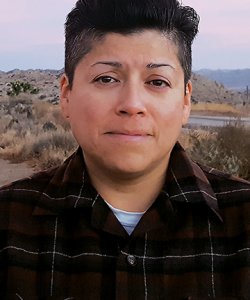
“My multiethnic existence is a protest against a racial hierarchy,” says Kali Fajardo-Anstine in “Keeping the Stories,” a profile by Rigoberto González published in the July/August 2022 issue of Poets & Writers Magazine. “If you ask me about my identity, prepare to hear about a complicated ancestry. I am a Chicana of Indigenous and mixed ancestry, and the story of who I am is inextricably tied to this country.” Inspired by Fajardo-Anstine’s statement, write an essay about the experiences that influence how you identify yourself in the world. What are the many stories that make up who you are?

Submissions Open for Santa Fe Writers Project Book Award

The 2022 Santa Fe Writers Project (SFWP) Book Award is still open for submissions! Offered biennially for a book of fiction or creative nonfiction, the prize awards $1,500 and publication by the Santa Fe Writers Project, a publisher with global distribution. Writers from all around the world are welcome to apply, though submitted manuscripts must be written in English. Unpublished and self-published work as well as prose published with a micro or small press that has not received marketing support are eligible. Winners will receive a full developmental edit, collaboration with an in-house copy editor, and the opportunity to work closely with SFWP’s layout and design team.

Using only the online submission system, submit a story collection, a novel, an essay collection, or a memoir of any length with a $30 entry fee by July 18. Deesha Philyaw, author of the award-winning short story collection The Secret Lives of Church Ladies, will judge. Visit the website for complete guidelines

An independent press founded in 1998, Santa Fe Writers Project challenges “the norms by embracing short stories, novellas, translations, reprints, and the avant-garde.” Started two years after the press began, the SFWP Book Award has previously been judged by writers including Carmen Maria Machado, Emily St. John Mandel, and Benjamin Percy. Recent contest winners are A.A. Balaskovits (Magic for Unlucky Girls), Lilly Dancyger (Negative Space), Wendy J. Fox (If the Ice Had Held), and Joseph Holt (Golden Heart Parade). 

Feeling Musical

6.30.22

In the introduction to the anthology This Woman’s Work: Essays on Music (Hachette, 2022) edited by Kim Gordon and Sinéad Gleeson, which is featured in “The Anthologist” in the July/August issue of Poets & Writers Magazine, composer and guitarist Heather Leigh writes about how the authors of each essay acknowledge that “music somehow remains intangible” and how “we can try to explain and to rationalize it, but we’re seduced back by the song.” What music seduces and captures you? Using this question as a guide, write an essay that centers around the impact a certain song or musician has had on your life. Use tangible memories and details to add texture to the composition of your essay.

Lars Horn in Conversation With Carolina De Robertis

Caption: 

“Fish have always swum me beyond my body, exploded me into some other mythic, imagined space.” Lars Horn talks about their love of research, writing about transmasculinity, and piecing together their first book, Voice of the Fish: A Lyric Essay, which won the 2020 Graywolf Press Nonfiction Prize, in this City Lights Live virtual event with Carolina De Robertis. Horn’s book is featured in Page One in the July/August issue of Poets & Writers Magazine.

Upcoming Contest Deadlines

According to some astrological predictions, the “Cancer season” we entered this week is particularly auspicious thanks to a new moon influenced by Jupiter, the planet of good fortune. So why not try your luck by applying to some contests with a July 15 deadline? Among the awards are a $20,000 prize for a published story collection; a $15,000 prize for a poem; a $1,000 prize for a poetry collection; a $1,000 prize for a novel; and $1,000 prizes for individual poems, short stories, essays, and works of flash fiction. All contests offer a cash prize of $1,000 or more. May Jupiter’s benefic beams shine upon you, writers!

Cincinnati Review Robert and Adele Schiff Awards: Three prizes of $1,000 each and publication in Cincinnati Review are given annually for a poem, a short story, and an essay. Rebecca Lindenberg will judge in poetry, Michael Griffith will judge in fiction, and Kristen Iversen will judge in nonfiction. All entries are considered for publication. Entry fee: $20.

Comstock Review Muriel Craft Bailey Memorial Award: A prize of $1,000 and publication in Comstock Review is given annually for a single poem. Ellen Bass will judge. All entries are considered for publication. Entry fee: $27.50 (or $5 per poem via postal mail).

Ghost Story Screw Turn Flash Fiction Competition: A prize of $1,000 and publication on the Ghost Story website and in the 21st Century Ghost Stories anthology is given twice yearly for a work of flash fiction with a supernatural or magical realism theme. The editors will judge. Entry fee: $15.

Narrative Poetry Contest: A prize of $1,500 and publication in Narrative is given annually for a poem or group of poems. The poetry editors will judge. All entries will be considered for publication. All entries are considered for publication. Entry fee: $25.

Rattle Poetry Prize and Reader’s Choice Award: A prize of $15,000 and publication in Rattle is given annually for a single poem. A Reader’s Choice Award of $5,000 is also given to one of ten finalists. The editors will judge the Poetry Prize, and subscribers and entrants will judge the Reader’s Choice Award by vote. All entries are considered for publication. Entry fee: $25. 

Regal House Publishing’s Petrichor Prize for Finely Crafted Fiction: A prize of $1,000 and publication by Regal House Publishing is given annually for a novel. The editors will judge. Entry fee: $25.

Story Prize: A prize of $20,000 is given annually for a short story collection written in English and published in the United States in the current year. Two runners-up receive $5,000 each. The $1,000 Story Prize Spotlight Award is also given for an additional short story collection “of exceptional merit.” Larry Dark and Julie Lindsey will judge the three finalists and the Spotlight Award winner; three independent judges will choose the Story Prize winner. Entry fee: $75.

Word Works Tenth Gate Prize: A prize of $1,000, publication by the Word Works, and 30 author copies is given annually for a poetry collection by a poet who has published at least two full-length books of poetry. Felicia Zamora will judge. Entry fee: $25.

Visit the contest websites for complete guidelines, and check out the Grants & Awards database and Submission Calendar for more contests in poetry, fiction, and creative nonfiction.

Literature’s Fate

6.23.22

In a recent post on Instagram by the poet Mark Wunderlich, he shared an image of a greyish white book washed of its letters, peeled back of the paper’s layers, and frayed at the edges. The caption reads, in part, “Mary Ruefle keeps a decomposing book in her yard to remind herself of the fate of all literature, and how we write anyway because we must.” Write an essay inspired by Ruefle’s decomposing book that meditates on the “fate” of your own writing. What lasting impact would you like to make? Is this what drives you to write?

CJ Hauser With Charlie Gilmour

Caption: 

CJ Hauser speaks about the surprise of their viral essay “The Crane Wife” and their process for writing essays in this 2021 virtual reading and conversation with author and journalist Charlie Gilmour for the Newcastle Centre for the Literary Arts in England. Hauser’s first nonfiction book, The Crane Wife: A Memoir in Essays (Doubleday, 2022), is featured in Page One in the July/August issue of Poets & Writers Magazine.

Small Loves

6.16.22

In “Blood: Twenty-Seven Love Stories,” which appears in The Crane Wife: A Memoir in Essays, forthcoming in July from Doubleday, CJ Hauser writes: “I want to learn from what went wrong in the past but sometimes it seems everything worth knowing has been redacted. As if ignorance is the only thing that allows each successive generation to tumble into love, however briefly, and spawn the next.” Hauser weaves together twenty-seven short sections that each tell the love stories, some sweet and others disquieting, of her parents and grandparents, as well as those of the author’s own life. The gripping narrative touches upon the themes of love, loss, fate, and sisterhood, as Hauser finds patterns in the way life’s love stories coincide with and contradict one another. Write an essay in sections connected by shared themes. Try, as Hauser does, to link distinct stories into a single narrative, tying the pieces together using common threads.

Pages

Subscribe to Creative Nonfiction