Ten Questions for Jo Ann Beard

“Eventually, like a banner, the imagination unfurls itself.” —Jo Ann Beard, author of Festival Days
Tags:
Jump to navigation Skip to content
“Eventually, like a banner, the imagination unfurls itself.” —Jo Ann Beard, author of Festival Days
After a dreary winter, spring is finally on the horizon. With deadlines of March 14 or March 15, these contests include opportunities for poets, fiction writers, and nonfiction writers alike. One awards a monthlong residency in Slovenia. All offer a cash prize of $500 or more.
Airlie Press Airlie Prize: A prize of $1,000 and publication by Airlie Press is given annually for a poetry collection. The editors will judge. Deadline: March 15. Entry fee: $25.
Bellingham Review Literary Awards: Three prizes of $1,000 each and publication in Bellingham Review are given annually for works of poetry, fiction, and creative nonfiction. The 49th Parallel Award for Poetry is given for a poem or group of poems. The Tobias Wolff Award for Fiction is given for a short story. The Annie Dillard Award for Creative Nonfiction is given for an essay. All entries are considered for publication. Jessica Jacobs will judge in poetry, Kristiana Kahakauwila will judge in fiction, and Sarah Einstein will judge in creative nonfiction. Deadline: March 15. Entry fee: $20 ($10 for each additional entry).
Colorado Review Nelligan Prize for Short Fiction: A prize of $2,000 and publication in Colorado Review is given annually for a short story. T. Geronimo Johnson will judge. All entries are considered for publication. Deadline: March 14. Entry fee: $15 ($17 for online submissions).
Fourth Genre Steinberg Essay Prize: A prize of $1,000 and publication in Fourth Genre is given annually for an essay. Xu Xi will judge. All entries are considered for publication. Deadline: March 15. Entry fee: $20.
Hidden River Arts Eludia Award: A prize of $1,000 and publication by Hidden River Publishing is given annually for a debut novel or story collection by a woman age 40 or older. Deadline: March 15. Entry fee: $20.
James Jones Literary Society First Novel Fellowship: A prize of $10,000 is given annually for a novel-in-progress by a U.S. writer who has not published a novel. Two runners-up will each receive $1,000. Deadline: March 15. Entry fee: $33.
Livingston Press Tartt Fiction Award: A prize of $1,000, publication by Livingston Press, and 100 author copies is given annually for a first collection of short stories by a U.S. citizen. Deadline: March 15. Entry fee: none.
National Poetry Series Open Competition: Five prizes of $10,000 each and publication by participating trade, university, or small press publishers are given annually for poetry collections. The 2021 publishers are Beacon Press, Ecco, Milkweed Editions, Penguin Books, and University of Georgia Press. Deadline: March 15. Entry fee: $35.
Prairie Schooner Raz-Shumaker Book Prizes: Two prizes of $3,000 each and publication by University of Nebraska Press are given annually for a poetry collection and a short story collection. Kwame Dawes will judge. Deadline: March 15. Entry fee: $25.
Robinson Jeffers Tor House Foundation Poetry Prize: A prize of $1,000 is given annually for a single poem. Kim Stafford will judge. Deadline: March 15. Entry fee: $10.
The Word Works Washington Prize: A prize of $1,500 and publication by the Word Works is given annually to a U.S. or Canadian poet for a poetry collection. Deadline: March 15. Entry fee: $25.
Verse Tomaž Šalamun Prize: A prize of $500 and publication by Factory Hollow Press is given annually for a poetry chapbook. The winner will also receive a monthlong residency in summer 2022 in a private apartment at the Tomaž Šalamun Center for Poetry in Ljubljana, Slovenia. Prose poetry, hybrid works, and translations of works of poetry by living writers from any language into English are also eligible. Sawako Nakayasu will judge. Deadline: March 15. Entry fee: $16 ($12 for students).
Washington College Hodson Trust–John Carter Brown Library Fellowship: A fellowship, which includes a stipend of $20,000, is given annually to a novelist or nonfiction writer working on a book relating to the literature, history, culture, or art of the Americas before 1830. The fellowship includes housing and university privileges for a two-month research period to be conducted at the John Carter Brown Library on the campus of Brown University in Providence, Rhode Island, and a two-month writing term at the Starr Center for the Study of the American Experience at Washington College in Chestertown, Maryland. Deadline: March 15. Entry fee: none.
Visit the contest websites for complete guidelines, and check out the Grants & Awards database and Submission Calendar for more contests in poetry, fiction, and creative nonfiction.
“We lived in the imperative,” writes Donika Kelly at the start of her poem “Ars Empathica” from her collection The Renunciations, forthcoming in May from Graywolf Press. The collection maps resilience in the face of childhood trauma and a failing marriage, charting memories through myth-like poems that call back to the book’s epigraph by Anne Carson: “To live past the end of your myth is a perilous thing.” Poems such as “Portrait of My Father as a Winged Boar,” “Self-Portrait in Labyrinth,” and a selection involving the figure of “the oracle” mix the intensity of real life with the self-mythologizing one must do in order to survive. Write an essay that explores what it means to “live past the end of your myth” by recounting what occurred after a personal catastrophe. How does one’s sense of self begin to shift in the wake of a new life?
Correction: An earlier version of this post incorrectly stated that the title of Donika Kelly’s forthcoming collection is The Imperatives.
The deadline is approaching for the PEN America Emerging Voices Fellowship. While previously designated for Los Angeles writers, the fellowship is now open to poets, fiction writers, and nonfiction writers from across the United States. Twelves fellows will receive $1,000 and participate in a five-month mentorship program, which includes one-on-one mentorship, introductions to various industry leaders, professional development workshops, and more. Designed for “early-career writers from communities that are traditionally underrepresented in the publishing world,” the program is open to writers who have not yet published a book and who do not hold an advanced degree in creative writing.
Using only the online submission system, submit a series of personal statements, a writing sample, a curriculum vitae, and the contact information for two references with a $25 entry fee by March 17. A committee of established writers, former fellows, and PEN America staff will judge. Visit the website for complete guidelines.
The Emerging Voices Fellowship was first established by PEN America Los Angeles in 1996, with the aim to serve “writers seeking financial and creative support to pursue their craft professionally.” Last year the program was disrupted as the pandemic swept the country, and in August 2020, PEN America indicated it would not open the 2021 fellowship application. The following month, however, the organization announced it would be able to redirect funding to the program and reenvision it on a national scale.
Ashley C. Ford’s Somebody’s Daughter, forthcoming from Flatiron Books on June 1, 2021.
“I most remember reading Chelsea Girls in the dark, in bars around San Francisco in the nineties—beneath the staircase in the backroom at Dalva, in a booth at Blondie's or the Uptown,” writes Michelle Tea in her Los Angeles Review of Books essay on reading the 1994 autobiographical novel by Eileen Myles, which influenced her as a writer, as well as a generation of queer writers. “What it was like to be female with that permeable body, to be a lesbian, to be working class or flat broke, to be a poet, a drunk,” writes Tea. “This is Chelsea Girls.” This week, write an essay about a book that was a formative influence on you as a writer. What was it about this book that helped you see yourself?
“Safe to say none of the other Muslim kids on the eastside of Columbus got MTV or BET in their cribs & we do at my crib sometimes like after Pops got a promotion or after Grandma moved in,” writes Hanif Abdurraqib in the long, energetic first sentence of his new book, A Little Devil in America: Notes in Praise of Black Performance (Random House, 2021), which is featured in Page One in the March/April 2021 issue of Poets & Writers Magazine. The book weaves together pieces that praise Black performance in America from Josephine Baker in mid-century Paris to the more intimate space of a living room in Columbus, Ohio. This week, inspired by Abdurraqib’s sharp reflections on culture, choose a moment in entertainment that has stuck in your mind and write an essay that praises and traces your connection to its legacy.
“It is so painful to be loved sometimes. Intolerable even.” In this 2020 virtual event hosted by Salve Regina University, Melissa Febos reads from her new essay collection, Girlhood (Bloomsbury, 2021), and answers questions about her writing process. A profile of Febos by Brian Gresko appears in the March/April issue of Poets & Writers Magazine.
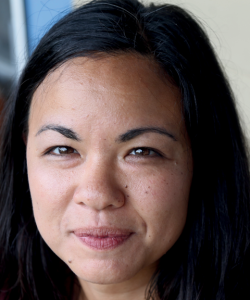
“There were so many revelations I could only have reached through the process of putting memories on paper.” —Elizabeth Miki Brina, author of Speak, Okinawa
It’s hard to believe, but the end of February is almost here! With deadlines of either February 28 or March 1, these awards include opportunities earmarked for writers in Alabama and Mississippi, as well as two prizes for Black writers who self-published books last year. All feature a cash prize of $500 or more.
Alabama State Council on the Arts Literary Arts Fellowships: Fellowships of $5,000 each are given annually to poets, fiction writers, and creative nonfiction writers who have lived in the state of Alabama for at least two years. Deadline: March 1. Entry fee: none.
Association of Writers & Writing Programs Award Series: Two prizes of $5,500 each and publication by a participating press are given annually for a poetry collection and a short story collection. In addition, two prizes of $2,500 each and publication by a participating press are given annually for a novel and a book of creative nonfiction. Ilya Kaminsky will judge in poetry, Rebecca Makkai will judge in short fiction, Sabina Murray will judge in the novel, and Aimee Nezhukumatathil will judge in nonfiction. Deadline: February 28. Entry fee: $30 ($20 for AWP members).
Biographers International Organization Hazel Rowley Prize: A prize of $2,000 will be given annually for a work-in-progress by a writer who has not published a biography. The winner will also receive review of their manuscript by an agent, publicity through the Biographers International Organization (BIO) website, and a one-year membership in BIO. Writers who have not previously published, or who are not under contract to write, a book of biography, history, or other work of narrative nonfiction are eligible. Deadline: March 1. Entry fee: $25.
Black Caucus of the American Library Association Self-Publishing Literary Awards: Two prizes of $500 each are given annually for a poetry e-book and a fiction e-book by an African American writer self-published in the United States during the previous year. The awards honor books that depict the “cultural, historical, and sociopolitical aspects of the Black Diaspora.” Deadline: February 28. Entry fee: none.
Fish Publishing Flash Fiction Prize: A prize of €1,000 (approximately $1,170) and publication in the Fish Publishing anthology is given annually for a short short story. The winner is also invited to give a reading at the West Cork Literary Festival in July 2021. Kathy Fish will judge. Deadline: February 28. Entry fee: €14 (approximately $16) for online entries or €16 (approximately $18) for postal entries.
Hunger Mountain Literary Prizes: Three prizes of $1,000 each and publication on the Hunger Mountain website are given annually for a poem, a short story, and an essay. Tomás Q. Morín will judge in poetry, Trinie Dalton will judge in fiction, and Terese Marie Mailhot will judge in nonfiction. Deadline: March 1. Entry fee: $20.
Little Tokyo Historical Society Short Story Contest: A prize of $500 and publication in the Rafu Shimpo and on the Discover Nikkei and Little Tokyo Historical Society websites is given annually for a short story that takes place in the Little Tokyo district of Los Angeles. Deadline: February 28. Entry fee: none.
Mississippi Arts Commission Literary Artist Fellowships: Grants of up to $5,000 each are given in alternating years to Mississippi poets, fiction writers, and creative nonfiction writers. This year the fellowships will be offered in categories including creative nonfiction. Applicants must be permanent residents of Mississippi. Deadline: March 1. Entry fee: none.
Omnidawn Publishing First/Second Poetry Book Contest: A prize of $3,000, publication by Omnidawn Publishing, and 100 author copies is given annually for a first or second poetry collection. Kazim Ali will judge. Deadline: February 28. Entry fee: $27 ($30 to receive a book from the Omnidawn catalogue).
Tupelo Press Snowbound Chapbook Award: A prize of $1,000 and publication by Tupelo Press is given annually for a poetry chapbook. Denise Duhamel will judge. Deadline: February 28. Entry fee: $25.
University of Wisconsin Institute for Creative Writing Fellowships: An academic year in residence, which includes a stipend of at least $39,000, at the University of Wisconsin in Madison is given annually to at least five writers working on a first or second book of poetry or fiction. Writers with an MFA or PhD in creative writing who have not published more than one book are eligible. Deadline: March 1. Entry fee: $50.
Visit the contest websites for complete guidelines, and check out the Grants & Awards database and Submission Calendar for more contests in poetry, fiction, and creative nonfiction.