PEN American Center has announced the shortlist for its annual literary awards, which this year will give nearly $150,000 in prize money to established and emerging writers and translators. The awards are given for works of poetry, fiction, nonfiction, translation, and children’s books.
“The PEN Literary Awards bring together writers, editors, and members of the literary community to celebrate the ultimate fruit of free expression: great literature,” said PEN Executive Director, Suzanne Nossel. “These shortlists represent a remarkable array of diverse talents.” In May, PEN issued the first longlist for the awards, in an effort to bring greater attention to the books submitted for the prizes.
The final winners will be announced on September 29 in New York City at the PEN Awards Ceremony, cosponsored by the New School.
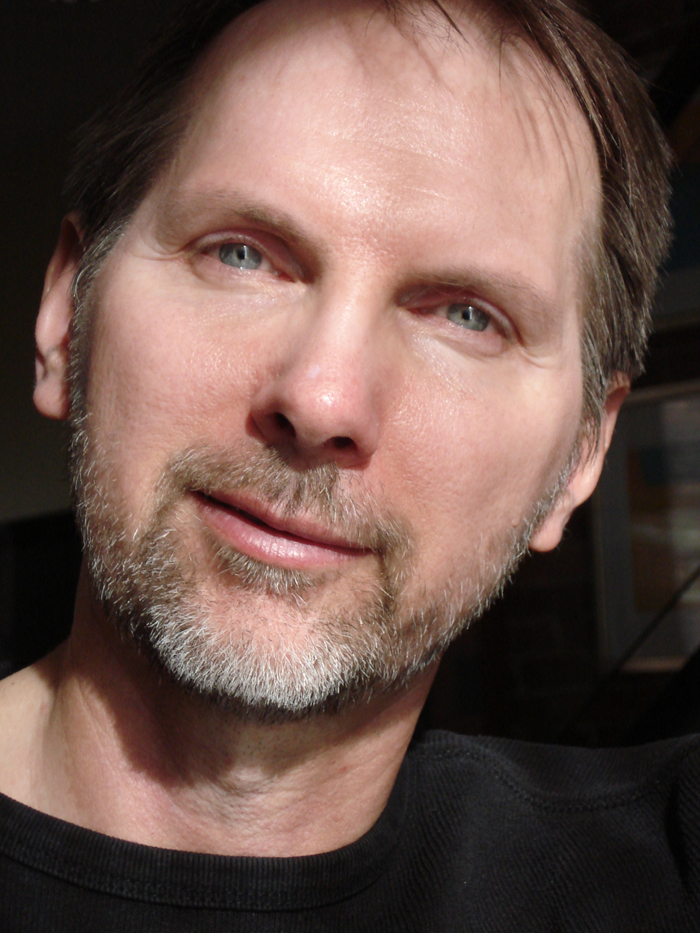 On Wednesday night, PEN also announced Ron Childress as the winner of the PEN/Bellwether Prize for Socially Engaged Fiction. The biennial prize, founded and funded by novelist Barbara Kingsolver, is given for an unpublished novel by an author whose work “addresses issues of social justice and the impact of culture and politics on human relationships.” Childress will receive $25,000, and his novel And West Is West will be published by Algonquin Books in Fall 2015. Terry McMillan, Nancy Peral, and Kathy Pories judged.
Established in 1922, the New York City–based PEN American Center works to “ensure that people everywhere have the freedom to create literature, to convey information and ideas, to express their views, and to make it possible for everyone to access the views, ideas, and literature of others.” PEN American Center has administered its Literary Awards for almost 50 years.
Below is a full list of finalists in each category:
PEN/Robert W. Bingham Prize ($25,000): To an author whose debut work—a first novel or collection of short stories published in 2013—represents distinguished literary achievement and suggests great promise.
A Constellation of Vital Phenomena (Hogarth), Anthony Marra
Brief Encounters With the Enemy (The Dial Press), Saïd Sayrafiezadeh
Everybody’s Irish (FiveChapters Books), Ian Stansel
Godforsaken Idaho (Little A/New Harvest), Shawn Vestal
The People in the Trees (Doubleday), Hanya Yanagihara
Judges: Charles Bock, Jonathan Dee, Fiona Maazel, and Karen Shepard
PEN/Diamonstein-Spielvogel Award for the Art of the Essay ($10,000): For a book of essays published in 2013 that exemplifies the dignity and esteem the essay form imparts to literature.
Forty-One False Starts (Farrar, Straus & Giroux), Janet Malcolm
Let’s Explore Diabetes With Owls (Little, Brown and Company), David Sedaris
The Faraway Nearby (Viking Adult), Rebecca Solnit
Critical Mass (Doubleday), James Wolcott
Judges: Geoff Dyer, Stanley Fish, Ariel Levy, and Cheryl Strayed
PEN/E. O. Wilson Literary Science Writing Award ($10,000): For a book of literary nonfiction on the subject of the physical or biological sciences published in 2013.
The End of Night (Little, Brown and Company), Paul Bogard
Five Days at Memorial (Crown), Sheri Fink
High Price (Harper), Carl Hart
Surfaces and Essences (Basic Books), Douglas Hofstadter & Emmanuel Sander
Wild Ones (Penguin Press), Jon Mooallem
Judges: Akiko Busch, Rivka Galchen, and Eileen Pollack
PEN Open Book Award ($5,000): For an exceptional book-length work of literature by an author of color published in 2013.
Duppy Conqueror (Copper Canyon Press), Kwame Dawes
Leaving Tulsa (University of Arizona Press), Jennifer Elise Foerster
domina Un/blued (Tupelo Press), Ruth Ellen Kocher
Cowboys and East Indians (FiveChapters Books), Nina McConigley
Ghana Must Go (Penguin Press), Taiye Selasi
Judges: Catherine Chung, Randa Jarrar, and Monica Youn
PEN/Jacqueline Bograd Weld Award for Biography ($5,000): For a distinguished biography published in 2013.
Lawrence in Arabia (Doubleday), Scott Anderson
Holding On Upside Down: The Life and Work of Marianne Moore (Farrar, Straus & Giroux), Linda Leavell
Margaret Fuller (Houghton Mifflin Harcourt), Megan Marshall
American Mirror: The Life and Art of Norman Rockwell (Farrar, Straus & Giroux), Deborah Solomon
A Life of Barbara Stanwyck (Simon & Schuster), Victoria Wilson
Judges: James Atlas, Lisa Cohen, and Wendy Gimbel
PEN/ESPN Award for Literary Sports Writing ($5,000): To honor a nonfiction book on the subject of sports published in 2013.
Collision Low Crossers (Little, Brown and Company), Nicholas Dawidoff
The Sports Gene (Current), David Epstein
League of Denial (Crown Archetype), Mark Fainaru-Wada & Steve Fainaru
The Emerald Mile (Scribner), Kevin Fedarko
Their Life’s Work (Simon & Schuster), Gary M. Pomerantz
Judges: Joel Drucker, Chad Harbach, and Jackie MacMullan
PEN/Steven Kroll Award for Picture Book Writing ($5,000): To a writer for an exceptional story illustrated in a picture book published in 2013.
Train (Orchard Books), Elisha Cooper
Tea Party Rules (Viking), Ame Dyckman
The King of Little Things (Peachtree Publishers), Bil Lepp
Crabtree (McSweeney’s McMullens), Jon & Tucker Nichols
Judges: Mac Barnett, Ted Lewin, and Elizabeth Winthrop
PEN Award for Poetry in Translation ($3,000): For a book-length translation of poetry into English published in 2013.
Even Now: Poems by Hugo Claus (Archipelago), David Colmer
Diaries of Exile by Yannis Ritsos (Archipelago), Karen Emmerich & Edmund Keeley
Collected Haiku of Yosa Buson by Yosa Buson (Copper Canyon Press), Takako Lento & W.S. Merwin
Paul Klee’s Boat by Anzhelina Polonskaya (Zephyr Press), Andrew Wachtel
Cut These Words Into My Stone: Ancient Greek Epitaphs (Johns Hopkins University Press), Michael Wolfe
Judge: Kimiko Hahn
PEN Translation Prize ($3,000): For a book-length translation of prose into English published in 2013.
An Armenian Sketchbook by Vasily Grossman (New York Review Books), Elizabeth & Robert Chandler
Transit by Anna Seghers (New York Review Books), Margot Bettauer Dembo
The African Shore by Rodrigo Rey Rosa (Yale University Press), Jeffrey Gray
The Emperor’s Tomb by Joseph Roth (New Directions), Michael Hofmann
Autobiography of a Corpse by Sigizmund Krzhizhanovsky (New York Review Books), Joanne Turnbull & Nikolai Formozov
Judges: Ann Goldstein, Becka McKay, and Katherine Silver
Photo: Ron Childress, credit PEN American Center