Martin Amis
Caption:
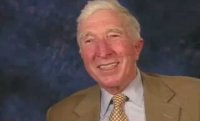
This video, from 2008, features British novelist Martin Amis discussing the "war on clichés" and the importance of staying faithful to a writer's literary perceptions.
Genre:
Tags:
Jump to navigation Skip to content
This video, from 2008, features British novelist Martin Amis discussing the "war on clichés" and the importance of staying faithful to a writer's literary perceptions.
The ping of a spatula. The rattle of dirty plates. A dropped spoon. Place the main character of your story or novel in a diner. Write a paragraph detailing the many sounds this character hears. Then have this same character receive devastating news via an anonymous letter delivered by the waitress. Write another paragraph about the sounds the character now hears. The two paragraphs should be very different. Tragedy changes us instantly in so many ways.
The New York City–based Center for Fiction has announced the long list for its 2013 Flaherty-Dunnan First Novel Prize, given for a debut novel published in the current year. The winner, who will be announced in December, will receive $10,000.
In the prize's second year of partnership with the American Booksellers Association (ABA), the nonprofit trade association for independent booksellers, member booksellers around the country served as first-round readers. Ben Fountain—who received the prize last year for his novel, Billy Lynn’s Long Halftime Walk (Ecco)—will serve as one of the final judges for this year’s prize, along with Victor LaValle, Roxana Robinson, Christine Schutt, and Luis Alberto Urrea. The short list will be announced in late August.
The long-listed finalists are:
Any Resemblance to Actual Persons by Kevin Allardice (Counterpoint)
The Blood of Heaven by Kent Wascom (Grove Press)
The Carriage House by Louisa Hall (Scribner)
A Constellation of Vital Phenomena by Anthony Marra (Hogarth)
Elders by Ryan McIlvain (Hogarth)
Eleven Days by Lea Carpenter (Alfred A. Knopf)
Ghana Must Go by Taiye Selasi (The Penguin Press)
In the House Upon the Dirt Between the Lake and the Woods by Matt Bell (Soho Press)
The Morels by Christopher Hacker (Soho Press)
Motherlunge by Kirstin Scott (New Issues Poetry & Prose)
The Next Time You See Me by Holly Goddard Jones (Touchstone)
The Residue Years by Mitchell Jackson (Bloomsbury)
The Silence of Bonaventure Arrow by Rita Leganski (Harper Paperbacks)
Southern Cross the Dog by Bill Cheng (Ecco)
Tampa by Alissa Nutting (Ecco)
A Teaspoon of Earth and Sea by Dina Nayeri (Riverhead Books)
The Unchangeable Spots of Leopards by Kristopher Jansma (Viking)
Wash by Margaret Wrinkle (Atlantic Monthly Press)
Wise Men by Stuart Nadler (Reagan Arthur Books)
Y by Marjorie Celona (Free Press)
The Yonahlossee Riding Camp for Girls by Anton DiSclafani (Riverhead Books)
You Are One of Them by Elliott Holt (The Penguin Press)
Short-listed authors, who will be announced in late August, will each receive a prize of $1,000. The winner will be announced at the Center for Fiction's annual awards dinner on December 11 in New York City. Submissions for the prize (which may be sent by publishers only) are considered annually in March.
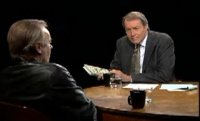
"To the young writers I would merely say, 'Try to develp actual work habits, and even though you have a busy life try to reserve an hour, say—or more—a day to write.' Some very good things have been written on an hour a day," says Updike in this June 2004 interview, less than five years before his death.
“Hubert Selby was the underdog and the voice for the...downtrodden, and was marginalized because he spoke up for the little guy,” says Henry Rollins. “But you see the great humanity and the warmth and richness that he brought to things.” The author of nine novels who died in 2004 is celebrated by two of his greatest champions, Rollins and Amiri Baraka, in this video from Open Road Media.
Tanyia Johnson and Stephen Gros are literary event producers with the Houston-based organization Make.Play.Speak. They team up to create unique events, such as Kerouacfest: Go!Go!Go! and the upcoming Word Around Town Tour, both supported by P&W. Together, Johnson and Gros answered our questions about the work they do.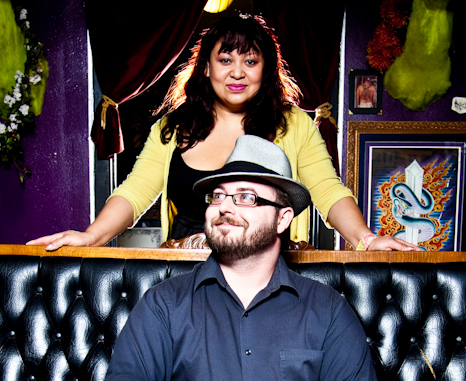 What makes your programs unique?
Johnson: We try to create events we would want to attend. My experience with performance is from theater, and Stephen is an active poet and performer, so our programming takes an all-inclusive approach. We want to create events that can be experienced on different levels—visual, auditory, and kinesthetic—and try to incorporate these models throughout our programming.
What recent project have you been especially proud of?
Gros and Johnson: Our recent project was KerouacFest: Go!Go!Go! March 9, 2013, an all-day event dedicated to legendary Beat writer Jack Kerouac. The event was held at the Orange Show Monument. The Orange Show was built by Houston mail carrier Jeff McKissack between 1959 and 1979. It was McKissack’s opus to the orange, his favorite fruit. This space is an amazing folk art environment filled with mosaics, found objects, and has an unusual layout design, so it was perfect for our event.
With a venue that has multiple performance areas and so much character, we had to develop programming that would feel right for the space. We included a mini biographical exhibit, a panel discussion, a crowd-sourced aggregate poem using Twitter, a DJ playing records from the Beat era, a variety of food trucks, poetry buskers banging out spontaneous poems, plus two incredible jazz bands, and live screen printing. All of that before we even add in the youth slam performance by Meta-Four, well-known Houston writers reading from Kerouac’s On The Road, or the incredibly talented P&W-supported poets—Marie Brown, Salvador Macias, BGK, Chris Wise, and Seth Walker—performing their own work.
We chose poets who weren’t necessarily writing in the style of Kerouac, but would evoke performances that reflected the jazz culture Kerouac desired to embody in his work. Overall, the event was very successful and rumors are already circulating of a follow-up festival next year.
How do you find and invite readers?
Gros: For the Word Around Town Tour we’ve recently instituted a Poet Draft. The Word Around Town Tour is an annual weeklong poetry marathon held at a different venue every night for seven days each summer since 2006, and it’s grown every year since it started. The current lineup consists of 21 poets plus seven veteran features. At that size, it can be tough to keep it fresh and find new talent. The Draft solves this problem. It’s essentially a big open mic where poets get ranked by the organizers and the winners get a spot in the lineup for the tour.
How do you cultivate an audience?
Johnson: At events, we encourage attendees to sign-up on MailChimp or find us on Facebook. Stephen has hosted and produced shows for many years, so he’s built up a network of followers. Houston has a pretty active poetry community. We also make a big effort to access people who usually aren’t attending these events. We try to get exposure through different media—radio, print, and online—to highlight the events we organize.
Can you speak to the value and challenges of collaboration?
Gros: For me, collaborating is a way to stay fresh. Having a different perspective brought to your vision can make the event become something remarkable. Specifically, Tanyia brings a knowledge and experience of event management and stage production, along with an endless stream of inspiring ideas, which makes her an asset on any team. Couple that with her unflappable dependability and professionalism, and it’s clear that she is the perfect collaborator.
Johnson: Collaboration is definitely a necessity for me because I am not a writer or a performance poet. I seek to collaborate with folks to create an artistic experience with a literary focus. My personal artwork has always been mixed-media, so I view this as an extension of mixed-media. The biggest challenge for me is scheduling. When you have more than two people collaborating, it’s tough to get everyone together at the same time.
How has literary presenting informed your own writing and/or life?
Gros and Johnson: Literary presenting has informed and influenced every aspect of our lives. We take vacations around the many annual events we produce. We’re more likely to buy new microphone equipment than new clothes. The list goes on. We live and breathe interdisciplinary art and literature events.
What do you consider to be the value of literary programs for your community?
Gros: Without literature, a community has no soul. Literary programs and live events inform and educate in an active, intellectually challenging way that other activities simply can’t compete against. Literary events provide knowledge of our shared literary heritage, while at the same time increasing awareness of cultural values, history, sociology, psychology, and almost every other branch of study. Reading, writing, and sharing with others are some of the most important things a community can do together.
Photo: Tanyia Johnson and Stephen Gros. Credit: Eric Kayne.
Support for Readings/Workshops events in Houston is provided by an endowment established with generous contributions from the Poets & Writers Board of Directors and others. Additional support comes from the Friends of Poets & Writers.
The New York City–based PEN American Center recently announced the finalists for its annual literary awards, which this year will give nearly $150,000 in prize money to established and emerging writers and translators.
The awards are given in ten categories for works of poetry, fiction, nonfiction, translation, and children's books. “We are proud that PEN’s Literary Awards are the most comprehensive in the country,” said PEN Executive Director, Suzanne Nossel. “This year we saw a record number of submissions from both traditional and independent publishers, including an impressive showing of emerging authors.”
The final winners and runners-up will be announced later this summer and will be honored at the 2013 PEN Literary Awards Ceremony on Monday, October 21, 2013, at CUNY Graduate Center’s Proshansky Auditorium in New York City.
Below is the full list of finalists in each category:
PEN/Robert W. Bingham Prize ($25,000): Given to an author whose debut work—a first novel or collection of short stories published in 2012—represents distinguished literary achievement and suggests great promise.
A Land More Kind Than Home (William Morrow), Wiley Cash
A Naked Singularity (University of Chicago Press), Sergio de la Pava
My Only Wife (Dzanc Books), Jac Jemc
Happiness Is a Chemical in the Brain (W.W. Norton & Co.), Lucia Perillo
Battleborn (Riverhead Books), Claire Vaye Watkins
PEN/John Kenneth Galbraith Award for Nonfiction ($10,000): To an author of a distinguished book of general nonfiction possessing notable literary merit and critical perspective and illuminating important contemporary issues which has been published in the United States during 2011 or 2012.
Iron Curtain (Doubleday), Anne Applebaum
Behind the Beautiful Forevers (Random House), Katherine Boo
Moby-Duck (Penguin Books), Donovan Hohn
God’s Hotel (Riverhead Books), Victoria Sweet
PEN/Diamonstein-Spielvogel Award for the Art of the Essay ($10,000): For a book of essays published in 2012 that exemplifies the dignity and esteem that the essay form imparts to literature.
What Light Can Do (Ecco), Robert Hass
The Story of America (Princeton University Press), Jill Lepore
Waiting for the Barbarians (New York Review Books), Daniel Mendelsohn
PEN/E.O. Wilson Literary Science Writing Award ($10,000): For a book of literary nonfiction on the subject of the physical or biological sciences published in 2012.
The Forest Unseen (Viking), David George Haskell
The Violinist’s Thumb (Little, Brown and Company), Sam Kean
Subliminal (Vintage Books), Leonard Mlodinow
Spillover (W.W. Norton & Co.), David Quammen
Rabid (Viking), Bill Wasik and Monica Murphy
PEN Open Book Award ($5,000): For an exceptional book-length work of literature by an author of color published in 2012.
Gun Dealers’ Daughter (W.W. Norton & Co.), Gina Apostol
When My Brother Was an Aztec (Copper Canyon Press), Natalie Diaz
Allegiance (Wayne State University Press), Francine J. Harris
Our Andromeda (Copper Canyon Press), Brenda Shaughnessy
The Grey Album (Graywolf Press), Kevin Young
PEN/Jacqueline Bograd Weld Award for Biography ($5,000): For a distinguished biography published in 2012.
James Joyce (Farrar, Straus and Giroux), Gordon Bowker
All We Know (Farrar, Straus and Giroux), Lisa Cohen
A Difficult Woman (Bloomsbury), Alice Kessler-Harris
The Lives of Margaret Fuller (W.W. Norton & Co.), John Matteson
The Black Count (Broadway Books), Tom Reiss
PEN/ESPN Award for Literary Sports Writing ($5,000): To honor a nonfiction book on the subject of sports published in 2012.
Over Time (Grove Press), Frank Deford
Road to Valor (Broadway Books), Aili and Andres McConnon
Like Any Normal Day (St. Martin’s Press), Mark Kram, Jr.
Floyd Patterson (Houghton Mifflin Harcourt), W.K. Stratton
PEN/Steven Kroll Award for Picture Book Writing ($5,000): To a writer for an exceptional story illustrated in a picture book published in 2012.
Snakes (Scholastic), Nic Bishop
Oh, No! (Schwartz & Wade Books), Candace Fleming and illustrator Andrea Castellani
I Lay My Stitches Down (Eerdmans), Cynthia Grady and illustrator Michele Wood
Those Rebels, John & Tom (Scholastic), Barbara Kerley and illustrator Edwin Fotheringham
The Fantastic Jungles of Henri Rousseau (Eerdmans), Michelle Markel and illustrator Amanda Hall
PEN Award for Poetry in Translation ($3,000): For a book-length translation of poetry into English published in 2012.
Spit Temple by Cecilia Vicuña (Ugly Duckling Presse), Rosa Alcalá
Diadem by Marosa di Giorgio (BOA Editions), Adam Giannelli
Tales of a Severed Head by Rachida Madani (Yale University Press), Marilyn Hacker
The Smoke of Distant Fires by Eduardo Chirinos (Open Letter Books), G. J. Racz
Almost 1 Book/Almost 1 Life by Elfriede Czurda (Burning Deck), Rosmarie Waldrop
The Shock of the Lenders and Other Poems by Jorge Santiago Perednik (Action Books), Molly Weigel
PEN Translation Prize ($3,000): For a book-length translation of prose into English published in 2012.
A Long Day’s Evening by Bilge Karasu (City Lights Books), Aron Aji and Fred Stark
Near to the Wild Heart by Clarice Lispector (New Directions), Alison Entrekin
Down the Rabbit Hole by Juan Pablo Villalobos (Farrar, Straus and Giroux), Rosalind Harvey
The Cardboard House by Martín Adán (New Directions), Katherine Silver
The Island of Second Sight by Albert Vigoleis Thelen (Galileo Publishers), Donald O. White
Sit down at your writing desk and look around you. Many of the objects nearby have a utilitarian purpose: Your coffee mug holds coffee, for instance. Other objects, however, possess emotional significance: your grandmother’s portrait over the couch, the painted conch shell you use as a paperweight. Perhaps that same coffee mug says, in faded and defeated letters, “World’s Greatest Parent.” In writing, objects in a character’s personal sphere should reflect something about the character’s emotional DNA. Start the exercise by making a list of meaningful objects within your character’s reach—wherever they may be. Then build their world into the scene. A coffee mug should never just be a coffee mug.
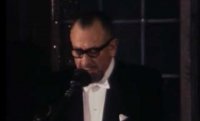
"And this I believe: that the free, exploring mind of the individual human is the most valuable thing in all the world. And this I would fight for: the freedom of the mind to take any direction it wishes, undirected." The author of twenty-seven books, including The Grapes of Wrath (1939), for which he won the Pulitzer Prize; East of Eden (1952); and the novella Of Mice and Men (1937) is seen here giving his acceptance speech at the Nobel Banquet in Stockholm on December 10, 1962.