Genre: Fiction

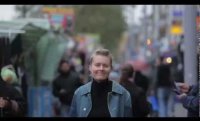
Seattle’s Karen Finneyfrock: The Spider at the Center of a Web

Karen Finneyfrock is a poet, novelist, and teaching artist in Seattle, Washington. Her second book of poems, Ceremony for the Choking Ghost, was published by Write Bloody in 2010. Her young adult novel, The Sweet Revenge of Celia Door, is forthcoming from Viking Children’s Books in 2013. She is a former writer-in-residence at Richard Hugo House in Seattle and teaches for Seattle Arts and Lectures’ Writers-in-the-Schools. Last spring, P&W supported her reading with the Seattle Rock Orchestra.

What are your reading dos?
I try to remind myself that a show is primarily for the audience and not for me. When I think of the audience member's experience, it allows me to be less fixated on my own nervousness or a myopic concern for my work. I remind myself that stage fright is essentially selfish, and I can focus on connecting with the listener instead.

What are your reading don’ts?
I think of the idiom, "Never wear a hat that has more personality than you do." Never wear an outfit that will upstage you or shoes that might cause you to trip. With that said, I like to dress like I'm ready to be seen. My other big don't is: Don't exceed the time limit you've been given. Time your work and be respectful to organizers and audience.

How do you prepare for a reading?
If I'm performing poetry, I like to rehearse late at night or early in the morning before I even get out of bed. I envision myself on the stage, and I run through everything I will say, even my banter between poems. Then, I run my pieces again in the shower. If I'm reading prose, I like to read through the selection and consider the context the audience will need about the piece to appreciate it the most. I make bullet points to remember what I want to say to the audience, but I never read from a script when I'm speaking about the work or to the crowd.

What’s your crowd-pleaser, and why does it work?
My best crowd-pleaser works because it is imagistic, literal, and uplifting at the end. I wouldn't want this for all of my poems, and I do seek to challenge audience members with pieces that create discomfort, but I like to leave people feeling good. I think of Shakespeare playing to all levels of the house. I want some pieces that every listener—even those new to poetry or new to abstract work—can say, "I got it," after hearing.

What was it like to perform with the Seattle Rock Orchestra?
Performing with a rock orchestra is exactly as cool as it sounds. First, composer John Teske met with me and listened to my poem, then he created an original, experimental score, which included vocalizations as well as instrumental noise. For example, as my poem started, "Even the wet floor of the city bus...," musicians made slurping noises behind me. John's concept was out of the box and stretched the idea of what music and poetry can sound like together. It avoided the cliché of pretty words with some nice stringed instruments playing and took it to the place a rock orchestra should go.

Standing on stage surrounded by a group of musicians, all attuned to my performance, was like being the spider at the center of an artistically sensitive web. I got the feeling they were prepared to follow me wherever I was going to go.

Photo: Karen Finneyfrock. Credit: Inti St. Clair
Support for Readings/Workshops events in Seattle is provided by an endowment established with generous contributions from the Poets & Writers Board of Directors and others. Additional support comes from the Friends of Poets & Writers.

Willow Books Launches New Literature Awards

Willow Books is currently accepting submissions for its first annual Literature Awards. A prize of $2,000 will be given for a book-length work of literary prose, and a prize of $1,000 will be given for a full-length collection of poetry. The two winning manuscripts will be published in spring 2013 by Willow Books.

The Willow Books Literature Awards are given to United States writers from culturally diverse backgrounds. “Our mission is to develop, publish, and promote writers typically underrepresented in the market,” the press’s website states. Ten finalists will be announced on January 21, 2013, and the winners will be announced at an awards ceremony and reading in Chicago later in the spring. The remaining eight finalists will have selections of their work published in an e-book anthology. All finalists for the awards are expected to attend the ceremony and assist in future online publicity for the press.

Judges for the poetry prize include poets John Murillo, Ching-in Chen, and Naomi Ayala; judges for the prize in literary prose include fiction and nonfiction writers Pauline Kaldas, Latha Viswanathan, and Ana-Maurine Lara.

“We are excited about our new competition and the caliber of our judges,” says Randall Horton, editor of Willow Books. “We are also planning to host workshops during the awards weekend, so watch for updates.”

Poets may submit three copies of a collection between 50 and 125 pages, along with a $25 entry fee; prose writers may submit three copies of a novel, short story collection, memoir, or essay collection (totaling no more than 100,000 words), along with a $30 entry fee. The deadline for submissions is October 1. Submissions are accepted via postal mail only.

Willow Books, established in 2007 as an imprint of the Detroit-based Aquarius Books, publishes poetry, fiction, and creative nonfiction. Some of the press’s recent authors include Tara Betts, Thomas Sayers Ellis, Rachel Eliza Griffiths, Krista Franklin, and Tony Medina.

Willow also partners with the Cave Canem Foundation to publish the biennial Cave Canem Anthology, a collection of poetry by Cave Canem faculty and fellows.   

For the required entry form and complete submissions guidelines for the Literary Awards, and for more information about Willow Books, visit their website. 

Emma Straub on Cats and Writing

Caption: 

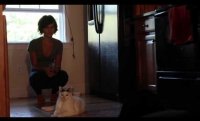
"Writing can be so lonely," says Emma Straub, who is profiled in the current issue of the magazine, "that it's nice to have another warm body nearby, snuggling up next to you." Listen to the author of Laura Lamont's Life In Pictures reflect on the bond between artists and animals in this video from the Morgan Library & Museum and read Eryn Loeb's new profile, "Emma Straub's Life in Letters (So Far)."

Genre: 

Museum Tour

8.15.12

Write a short story in which a museum is the setting for the central conflict. Consider the following questions: What kind of museum is it? Why are the characters there? Do any of the museum's objects trigger a turn in the story? Visit a local museum or peruse one's holdings online to find inspiration.


Helen DeWitt's "Recovery"

Caption: 

In this video for Electric Literature's Recommended Reading, Erin Smith animates and scores a sentence from "Recovery" by Helen DeWitt, set to music by Spookfish. Here's the sentence: "Um, okay, no, not purring like, obviously, producing a sound that is more reminiscent of steam engine FX than your typical purr."

Genre: 

Totem

Write a story in which one of the following objects triggers a flashback: a child’s keyboard, a bag of Werther’s Original Caramels, a taxidermied animal, a bar of lavender soap, or an old travel brochure.

Pages

Subscribe to Fiction