




How to Get Unstuck: The Psychology of Writer’s Block
A look at the psychology of writers block and how scientific studies in creativity offer insight into how writers can use the tools they already have to break through.
Tags:
Jump to navigation Skip to content
A look at the psychology of writers block and how scientific studies in creativity offer insight into how writers can use the tools they already have to break through.
With so many good books being published every month, some literary titles worth exploring can get lost in the stacks. Page One offers the first lines of a dozen recently released books, including Atiq Rahimi's The Patience Stone and Catie Rosemurgy's The Stranger Manual, as the starting point for a closer look at these new and noteworthy titles.
Small Press Points highlights the happenings of the small press players. This issue features Madras Press, a publisher of individually bound stories and novellas.
Literary MagNet chronicles the start-ups and closures, successes and failures, anniversaries and accolades, changes of editorship and special issues—in short, the news and trends—of literary magazines in America. This issue's MagNet features Mosaic, New Ohio Review, the Massachusetts Review, Monkeybicycle, the LBJ: Avian Life, Literary Arts, McSweeney's Quarterly Concern, and Scarab.
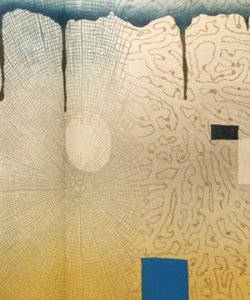
A look at one of the handcrafted books from Somewhere Far From Habit: The Poet and the Artist's Book, an exhibition opening at the Longwood Center for Visual Arts in Farmville, Virginia, which presents thirty collaborations between some of the country's most inspiring poets and accomplished book artists.

Chip Kidd, whose famous designs have graced over eight hundred book jackets in the last twenty-four years, speaks about the cover he created for this issue of Poets & Writers Magazine.
Before it was possible to read a novel on a Kindle, before there were text messages and Twitter, Gertrude Stein said, "I like the feeling of words doing as they want to do and as they have to do." As innovative as Stein was, it might have been hard for her to imagine today's digital landscape of language and the growing number of online dictionary and language sites, such as Urban Dictionary, Save the Words, and the recently launched Wordnik.
On January 15, City University of Hong Kong, an English-language school with seventeen thousand students and a campus notable for its urban, contemporary architecture, will begin accepting applications for a new low-residency MFA program in creative writing.
The latest casualty in the ongoing siege of academic presses and literary magazines in the economic downturn was recorded last fall when Northwestern University announced plans to end the forty-five-year run of its prize-winning journal TriQuarterly as a print publication. After the magazine's final print issue this spring, it will become an online-only, student-run publication.
It may not have been The Year Print Died, but 2009 will undoubtedly go down as the year digital literature became impossible to ignore. From celebrity authors' crowdsourcing stories through Twitter, to the proliferation of online publishing platforms, to the bruiting discord over the Google Book Search settlement, something new is plainly afoot in the publishing world, even if the ramifications for writers are still more a matter of conjecture than measurement.
