




Michelle Tea’s Queer Space with Homemade Cookies
Poet and writer Michelle Tea has been both a P&W–supported writer and presenter of literary events. Her many books include a poetry collection, novels, and memoirs. Tea's novel, Valencia, won the 2000 Lambda Literary Award for Best Lesbian Fiction. Tea founded the literary nonprofit RADAR Productions and co-founded the spoken word tour Sister Spit. We asked her a few questions about her experience as a writer and reading series curator.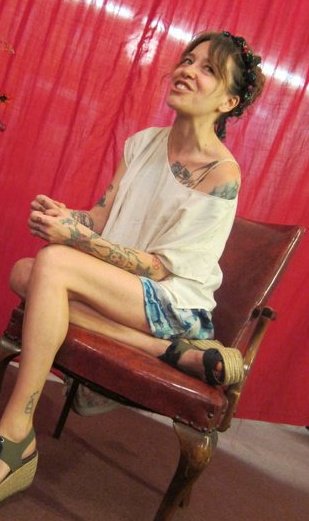 What are your reading dos?
Be relaxed! Audiences are as interested in YOU as they are in your piece. Ad-libbing through the work (if the work allows for it) is generally charming; some of my favorite readers will break off the page and address the audience in a spontaneous, natural way.
What are your reading don’ts?
Don't take it so seriously. You are not delivering a testimony to Congress. Don't speak in POETRY VOICE. You know what I mean. There are writers whose work I enjoy on the page, but I can't listen to them read it because that inflection makes me leave my body.
How do you prepare for a reading?
I don't, unless you count neurotically changing my mind about what I'm reading and wearing "preparation." I call it mental illness. Not everything works best aloud. I try to not feel the audience too much because it’s easy to mistake silence for boredom, and then I get nervous and start acting desperate. I try to read as if everything I'm delivering is AMAZING.
What’s the strangest interaction you’ve had with an audience member?
Sometimes a person thinks that just because you are comfortable reading something sexual in the very specific and controlled environment of a reading, it means you are down for discussing sex with random strangers. And I actually enjoy that no more than the average person, which is to say, not much.
What’s your crowd-pleaser, and why does it work?
They all seem to revolve around shock. In Rose of No Man's Land, it's when a character throws her dirty tampon at a boy who is harassing her. In Valencia, it’s an unusual sex scene. In Rent Girl, it’s a very funny fake orgasm contest between two prostitutes—which allows me to caw like a bird whilst performing, so I like it, too.
What makes the RADAR Reading Series unique?
My reading series has been running for almost nine years. I mix up my readers—unpublished, published, well-known, emerging, and I bring in graphic novelists, video artists, and photographers. It's free. There’s a Q&A segment, and I hand out homemade cookies to whoever asks questions. (There are always questions!)
It's queer like a queer bar—anyone can go in, but you know it’s a space that has prioritized queer people. As a queer person I spend tons of time in straight spaces where queers are welcome, but the spaces are straight, even though often they aren't designated as such because straight people aren't accustomed to thinking about space like queers are. RADAR uses that model—yes, of course everyone is welcome, but the space, the event, is queer.
What do you consider to be the value of literary programs for your community?
My immediate community is a queer community that still suffers from a lack of representation in all media, especially literary, even in San Francisco. The value of having a place you can go to see elements of your experience and community reflected back at you in a thoughtful, honest, artistic manner is HUGE. I was just passing through San Francisco when I came here in 1993, but the reason I stayed is that the work I do—writing, curating events, and promoting other writers—is so supported here. And it's supported in part by Poets & Writers, so thank you!
Photo: Michelle Tea. Credit: Food For Thought Books.
Major support for Readings/Workshops in California is provided by The James Irvine Foundation. Additional support comes from the Friends of Poets & Writers.
 What makes your reading series unique?
 Every fourth Sunday of the month, around 7 PM, a line forms in front of the Apache Café. Veteran attendees know that by 7:30, you’re likely to be holding up the bar with your back if you haven’t grabbed a seat. Late arrivers, self-imposed rock stars, and those who think they have some pull with the host trickle in around ten and miss the sign-up list. The coveted thirty slots to rock your best poem, sing your best cover, or deliver the original tune you’ve been practicing in the privacy of your bathroom with a hair brush and a Misty Mirror are gone as quickly as the chairs.
 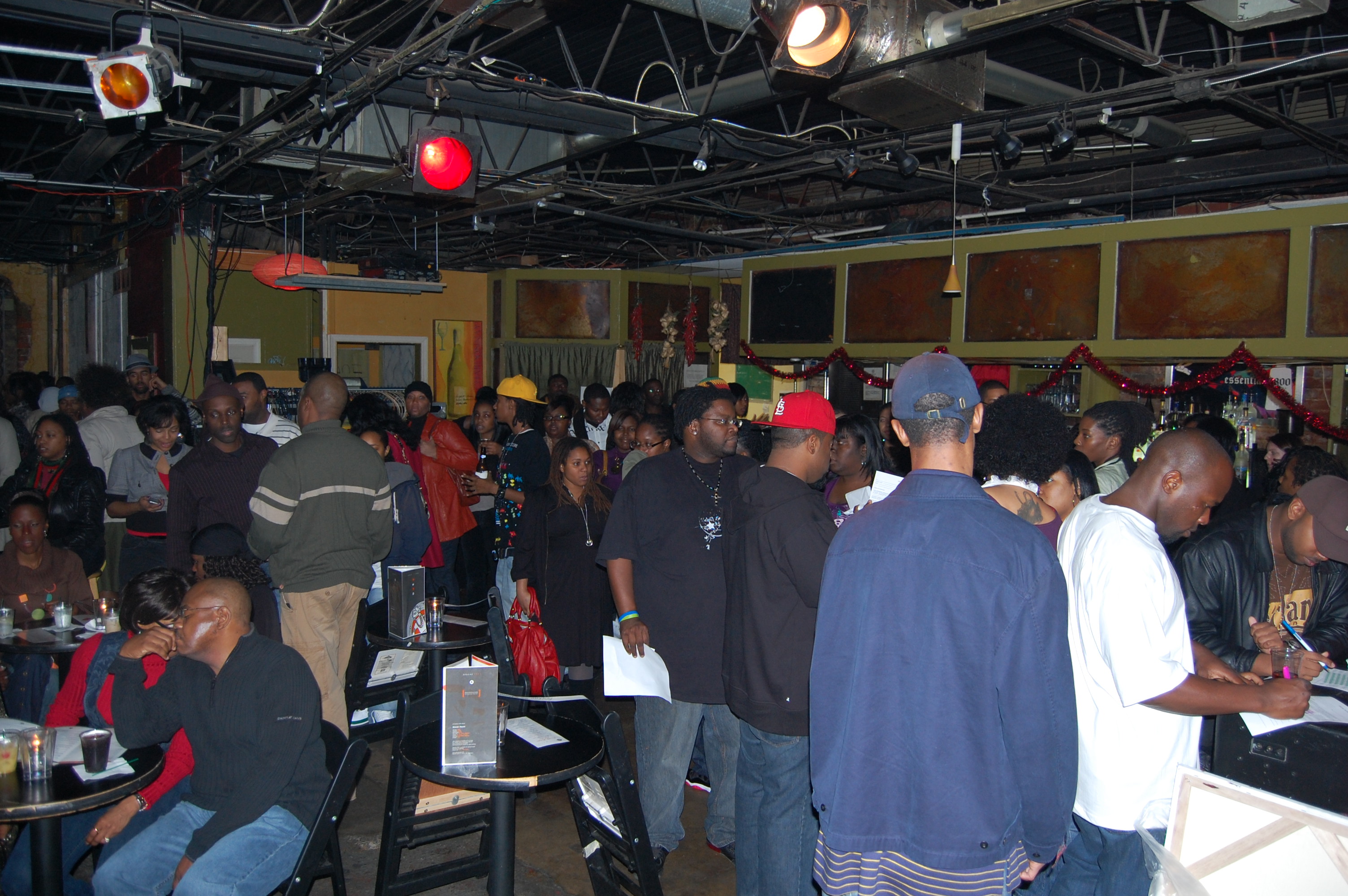 But nothing comes without sacrifice. The $7 admission, even with a packed house of 200-plus, couldn’t cover the cost of the venue, host, DJ, and a nationally touring featured poet. That’s where Poets & Writers swoops in to help relieve the daunting task of fundraising.
  What makes the Soulflower Group unique?
 What makes your press and its programs unique?
 What is your most successful literary program?
 He went on to explain that he’d recently had a bad car accident, suffered whiplash, and now had “this brain-stem injury thing,” which meant a sudden jolt could send his world upside down. Which also meant that he had no choice other than to be desperately “low key." He apologized in advance for not being at his best.
  The festival aims to re-brand poetry as something anyone and everyone can enjoy, according to Van Clief. There were craft workshops geared towards the youth as well as business workshops to better inform poets on how to make art their livelihood in today’s multifaceted market.