




June 30
Open your medicine cabinet and choose something from it that one character will use to kill another in a story.
Jump to navigation Skip to content
Open your medicine cabinet and choose something from it that one character will use to kill another in a story.
Kore Press, whose mission is to publish diverse works by women writers, has temporarily suspended its eight-years-running poetry book competition for 2011. The nonprofit publisher will resume the contest in 2012, following a period of restructuring that, according to the press's business and marketing manager, necessitates a hiatus.
The short fiction contest will go on as planned this year, and the winner of last year's poetry book contest will see her debut published, as well. Michelle Chan Brown's Double Agent will be released in the fall.
In the video below, Brown reads from her chapbook, Clever Little Decoys, published by Love Among the Ruins last year.
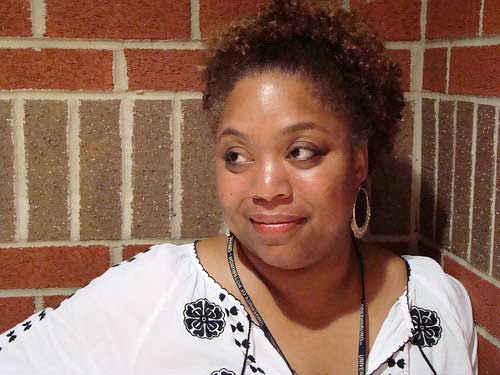
Poet Kelly Norman Ellis, author of Tougaloo Blues and longtime P&W-supported writer and presenter of literary events, dotes on Chicago's South Side and the Neighborhood Writing Alliance.
I’ve lived and worked on Chicago’s South Side for almost thirteen years. As an educator and writer, I am attracted to organizations that express a commitment to writing and art outside the academic community. Our writing program at Chicago State seeks to coalition build with community organizations so that our students realize the benefits and necessity of teaching outside of the academy.
 The Neighborhood Writing Alliance (NWA) located on the South Side of Chicago fills this need. NWA runs writing workshops for adults in low-income neighborhoods throughout Chicago, and publishes selected pieces from those workshops in its quarterly award-winning publication, Journal of Ordinary Thought (JOT). Founded in 1996 by Hal Adams, Deborah Epstein, and Sunny Fischer, NWA grew out of JOT, which was founded by Hal Adams in 1991.
Hundreds of Chicago adults have participated in NWA writing groups in a range of settings—from public libraries and public schools (where parents participate) to social service agencies and public housing projects. Workshops are conducted across ethnic lines. In one workshop, I taught African Americans born in Chicago, Mississippi, and Jamaica; Polish immigrants; fourth generation Irish Americans and second generation Mexican Americans. Participants in these workshops write primarily from their own experience, but through writing and discussion make connections between their personal experiences and broader social issues.
Workshop leaders are Chicago-based professional writers and arts educators such as Krista Franklin, Toni Asante Lightfoot, Parneshia Jones, Tony Lindsay, Carlos Flores, and Valerie Wallace, to name a few. NWA also has an impressive Writer’s Advisory Council, which includes Achy Obejas, Alex Kotlowitz, television journalist Bill Kurtis. The legendary Studs Turkel also served on the council before his death.
Our MFA program at Chicago State believes in the connection of writing and social justice. NWA demonstrates this principal at work by providing internships to our writing students on the graduate and undergraduate level, allowing them to experience the successful marriage of art and activism.
Photo: Kelly Norman Ellis. Credit: Natasha Marin.
Support for Readings/Workshops events in Chicago is provided by an endowment established with generous contributions from Poets & Writers Board of Directors and others. Additional support comes from the Friends of Poets & Writers.
Over the weekend, the American Museum of Natural History opened a yearlong exhibition of scientific photographs made using state-of-the-art technologies. If you're not in New York City to take in the show in person, check out some of the images online (Wired has a collection of favorites) and write a poem examining the life of the elegant forms and miniature worlds captured in exquisite detail.
Poetry and prose publisher Black Lawrence Press is accepting entries to its multi-genre book contest, with a special deal for writers who submit before June 30.
Entry to the St. Lawrence Book Award competition, open to both poetry and short story manuscripts, is fifteen dollars (reduced from twenty-five) until next Thursday. (The press offered a similar promotion last year for another of its prizes, with a choose-your-own-entry-fee model.)
The book prize offers one thousand dollars and ten copies of the published book. The deadline for entry is August 31, and finalists will be announced in October, followed shortly thereafter by the winner selection.
Past winners for poetry include Katie Umans for Flock Book, Brad Ricca for American Mastodon, Jason Tandon for Give Over the Heckler and Everyone Gets Hurt, and Stefi Weisburd for The Wind Up Gods. For fiction, Yelizaveta P. Renfro won for A Catalogue of Everything in the World: Nebraska Stories, Fred McGavran for The Butterfly Collector, and Marcel Jolley for Neither Here Nor There.
More details on the prize history and how to enter online are available on the press's website.
Chicago-based poet Kelly Norman Ellis, author of Tougaloo Blues and longtime P&W-supported writer and presenter of literary events, bigs up the Guild Literary Complex's Palabra Pura literary series.
Once of my first experiences with literary community when I moved to Chicago was with the Guild Literary Complex, a community-based literary organization. Thirteen years ago I attended a writing workshop lead by poet Afaa Michael Weaver. I remember sharing space with then emerging writers Tyehimba Jess, Tara Betts, Reggie Gibson, Quraysh Ali Lansana, and the late Nicole Shields. I found my first Chicago writing family at the Guild and was welcomed into the safe space where we talked and worked our poems into the world.
 One of the Guild’s strengths is its commitment to dialogue between artists of different backgrounds and sensibilities. My most recent experience with the Guild was with the Palabra Pura literary series.
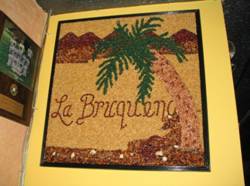
Palabra Pura promotes literary expression in more than one tongue through a monthly bilingual poetry reading featuring Chicano and Latino writers and African American writers. I was paired with writer Sandra Posadas in the Puerto Rican neighborhood of Humboldt Park. Hosted at La Bruquena, an amazing Puerto Rican restaurant, the reading positioned our literary discussion in the middle of a community that inspires the art we study and create. These types of interactions are usually the domain of academic institutions, but the Guild believes art belongs to the people who inspire it.
The work of the Guild reminds us that art is not created in a vacuum. The interaction and creative exchange between diverse writers’ communities creates more art, better art, and more safe spaces for that art to breathe.
Support for Readings/Workshops events in Chicago is provided by an endowment established with generous contributions from Poets & Writers Board of Directors and others. Additional support comes from the Friends of Poets & Writers.
Oregon-based High Desert Journal is accepting entries for its Obsidian Prize for poetry inspired by the West. All forms are accepted, from "free verse to haiku to cowboy," and the winning poet, selected by Paulann Petersen, will receive one thousand dollars and publication in the magazine.
Submissions are accepted only via Submishmash, and the entry fee for three poems totaling no more than one hundred lines is twelve dollars. The deadline is August 15.
The journal will administer a similar prize for fiction in the fall. The winner of last year's fiction prize was Joe Wilkins for "Enough of Me," selected by Gretel Ehrlich, which was published in the latest issue of High Desert Journal.
In the video below, poetry judge Paulann Petersen's poem "Replenish" is set to music by Portland, Oregon, ensemble Flash Choir.
The Poetry Center in Paterson, New Jersey, has announced the winner of the 2011 Paterson Fiction Prize, given annually for a novel or short story collection. Danielle Evans won the one-thousand-dollar prize for her short story collection, Before You Suffocate Your Own Fool Self (Riverhead Books), which earlier this year was longlisted for the Story Prize and given an honorable mention for the PEN/Hemingway Foundation Award.
Evans's debut book takes its title from "The Bridge Poem" by Kate Rushin (The Black Back-Ups, Firebrand Books, 1993), whose meditation on the phenomenon of one group's "translating" their lives for the benefit of another group influenced the themes of Your Own Fool Self. "Right now we have a moment with a lot of language about post-racialism and yet a lot of evidence that we are clearly not post-anything," Evans told the Washington Post, "and there's a lot of room for complication, contradiction, and ambiguity, which is good territory for fiction."
Evans received the prize over fellow Iowa Writers' Workshop alumna (and current Workshop director) Lan Samantha Chang's All Is Forgotten, Nothing Is Lost (W. W. Norton), Deborah Eisenberg's The Collected Stories of Deborah Eisenberg (Picador), Patricia Engel's Vida (Black Cat), Lily King's Father of the Rain (Atlantic Monthly Press), Chang-rae Lee's The Surrendered (Riverhead Books), and Cynthia Ozick's Foreign Bodies (Houghton Mifflin Harcourt).
In the video below, novelist Tayari Jones praises Evans's book. (And in the video here, the Washington Post's video book reviewer Ron Charles—who recently won an award of his own—takes on Evans's collection.)
Track down what's referred to as "the Flitcraft parable" or "the Falling Beams story" in Dashiell Hammett's novel The Maltese Falcon. Read it first as a period piece, but then try to bring it closer to your world. Focus on that devastating final line of the story, "He adjusted himself to beams falling, and then no more of them fell, and he adjusted himself to them not falling." Read that sentence over and over again, and allow yourself to feel the promise and the terror contained within the sentence—the promise of change, the terror of sameness. Now begin a story using that sentence and see where it leads you.
This week's fiction prompt comes from Siddhartha Deb, author of the novels The Point of Return (HarperCollins, 2002) andAn Outline of the Republic (Ecco, 2005). His book of nonfiction, The Beautiful and the Damned: A Portrait of the New India, will be published in August by Faber and Faber.
Poet Kelly Norman Ellis, author of Tougaloo Blues and longtime P&W-supported writer and presenter of literary events, spotlights Chicago's Proyecto Latina and its famed Chisme Box.
One of the blessings of living and working in Chicago is the great ethnic and racial diversity. I am often humbled at the hard work of community arts organizations in my city and their commitment to representing this great diversity. These organizations bring quality art to the people for little or no charge and are essential relationships in building a literary community outside the boundaries of college classrooms and MFA programs. Because CSU is a university serving mostly black and brown people, the importance of coalition building is critical to exposing these people to the work of writers who live and work in these communities of color. One such organization is Proyecto Latina.
 Proyecto Latina is a multimedia project that amplifies the success and impact of Latinas by sponsoring a reading series and a website that allows women to create a culture of self-empowerment, spotlight emerging and established Latina talent, create safe spaces in underserved communities, provide a virtual platform to chronicle stories, share resources, and start dialogue.
The third Monday of every month Proyecto celebrates the creativity of a Latina artist. The roster of writers is very impressive. Writers such as Xanath Caraza, Yolanda Nieves, Awilda Lupe Gonzalez have all graced the Proyecto Latina mike. The website includes advice for emerging writers, interviews with established writers, and information about the work of Latina writers in the Chicago community and abroad.
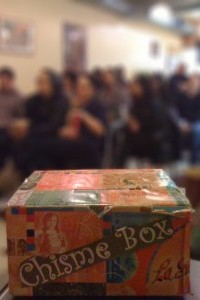
Also on the Proyecto Latina website is a photograph of the Chisme Box (Chisme means "gossip" in Spanish). It’s described as “a regular at our monthly readings and she loves to interact with everyone. She loves the buzz of a crowded room and has the bad habit of eavesdropping on everyone, but rest assured she can keep a secret. Despite her name she prefers funny confessionals to mean-spirited gossip and is unapologetic about spitting out deposits that don’t sit well with her." The Chisme Box is a way to share stories, information, wisdom, truth. As our writing program grows at CSU, I will be reminded of the Proyecto Latina’s Chisme Box and the ways artist make worlds whereever we go.
Support for Readings/Workshops events in Chicago is provided by an endowment established with generous contributions from Poets & Writers Board of Directors and others. Additional support comes from the Friends of Poets & Writers.
