Genre: Creative Nonfiction

The Future of Books

Caption: 

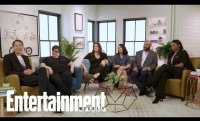
“The questions that I try to answer in the book, through fiction, are questions about people I knew when I was a child…I made up the answers because I could not access the real answers.” In this Entertainment Weekly video, De’Shawn Charles Winslow, author of the debut novel, In West Mills (Bloomsbury, 2019), speaks with fellow debut authors Taffy Brodesser-Akner, Sarah M. Broom, Linda Holmes, and Lisa Taddeo about the inspiration and evolution of their books. Winslow is featured in “First Fiction 2019” in the July/August issue of Poets & Writers Magazine.

Writer’s Library, Writer’s Life

6.20.19

“A writer’s library is more than just a collection of books. It is also a piecemeal biography of that writer’s life,” writes James P. Blaylock in his essay “My Life in Books: A Meditation on the Writer’s Library” in the July/August issue of Poets & Writers Magazine. This week, write a personal essay that follows a timeline of five or six books that have been benchmarks in your life, or played pivotal roles in some way. Who were the people in your life when you read each book, what were your geographical surroundings, and what were some of your major accomplishments, issues, or concerns at the time? What are the thematic links that lead from one book to the next?

Emilie Pine

Caption: 

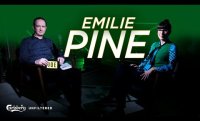
Emilie Pine talks about fear of failure, connecting to readers, being open about grief and loss, and the power of storytelling with Ireland Unfiltered’s Dion Fanning. Pine’s debut essay collection, Notes to Self (Dial Press, 2019), is featured in Page One in the July/August issue of Poets & Writers Magazine.

Three Women by Lisa Taddeo

Caption: 

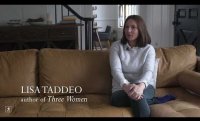
“I think desire is at once the thing we think most about and also our most slippery secret, and I wanted to explore the nuance of that intersection.” In this Simon & Schuster interview, Lisa Taddeo discusses the intimate research done for her first book, Three Women (Avid Reader Press, 2019), which is featured in Page One in the July/August issue of Poets & Writers Magazine.

The Rabbit Hole

6.13.19

“My feckless Googling had reaped a monstrous reality that I knew was going to haunt me for the rest of my life,” Douglas Preston writes in Wired about a nostalgia-induced online search for his childhood best friend that leads him into some unexpectedly dark territory. This week, think about a time when you inadvertently uncovered something (good or bad) you weren’t meant to know—perhaps you overheard a conversation about yourself or someone close to you, followed an Internet search that spiraled to an unintentional conclusion, or submitted an online DNA kit without considering the consequences. Write an essay about the discovery and the actions you took as a response. Did you confront this new truth or carry on as if you had never learned it?

Loose and Lyrical Truths

“Lyrical essays are more like jazz than a concerto. The idea that lyrical essays are more poetic than logical has allowed authors to play fast and loose with the truth,” writes GD Dess in his Los Angeles Review of Books review of Elisa Gabbert’s essay collection The Word Pretty (Black Ocean, 2018). Think of a current conflict or issue in your personal life that remains unresolved—perhaps you are uncertain where exactly the truth of the matter lies. Write a lyric essay that engages with the seemingly solid facts of the topic, but allow yourself the freedom to veer into stream of consciousness and follow a “more poetic” logic. 

Pages

Subscribe to Creative Nonfiction