To AWP or Not?

I was looking forward to meeting up with the literary outreach coordinators, Justin Rogers from Detroit and Lupe Mendez from Houston, and staff members from Poets & Writers at the Association of Writers & Writing Programs (AWP) conference in San Antonio, Texas this week, but safety first. Due to the concern about the coronavirus in San Antonio, we decided not to attend and sadly had to cancel the wonderful panel planned on Saturday to discuss our respective literary communities in New Orleans, Detroit, and Houston.

Nevertheless, people in New Orleans are taking all the news in stride. Some local writers who were planning to attend the AWP conference stayed in New Orleans, others went ahead to San Antonio.

The good thing is, we still have lots of great literary events to look forward to in New Orleans:

The New Orleans Book Festival at Tulane University is March 19­–21.

The Tennessee Williams & New Orleans Literary Festival is March 25–29.

The New Orleans Poetry Festival will be in April during National Poetry Month.

Join us in New Orleans!

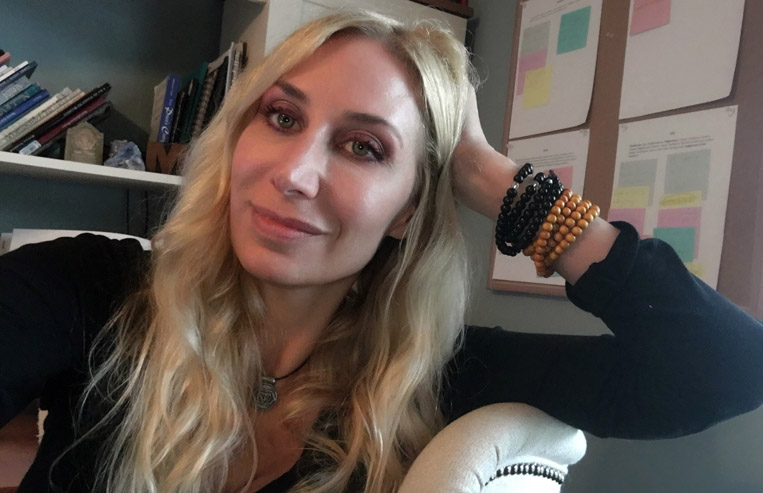
Kelly Harris is the literary outreach coordinator for Poets & Writers in New Orleans. Contact her at NOLA@pw.org or on Twitter, @NOLApworg.

Submissions Open for Sonora Review Nonfiction Contest

A new Sonora Review creative nonfiction contest is open for submissions. The literary journal has partnered with the University of Arizona Consortium on Gender-Based Violence for a nonfiction contest and special online issue centered on the theme “Extinction.” The winner of the nonfiction contest will be awarded $1,000 and publication of their work as a booklet to be inserted into Issue 77 of Sonora Review. Writers must respond to the specific prompt given, which explores extinction as it relates to violence against women.


Using only the online submission system, submit a piece of creative nonfiction of up to 6,000 words with a $15 entry fee by March 27. Author and activist Lacy M. Johnson will judge. Visit the website for complete guidelines.

Established in 1980, Sonora Review is run by graduate student volunteers in the University of Arizona Creative Writing MFA program.

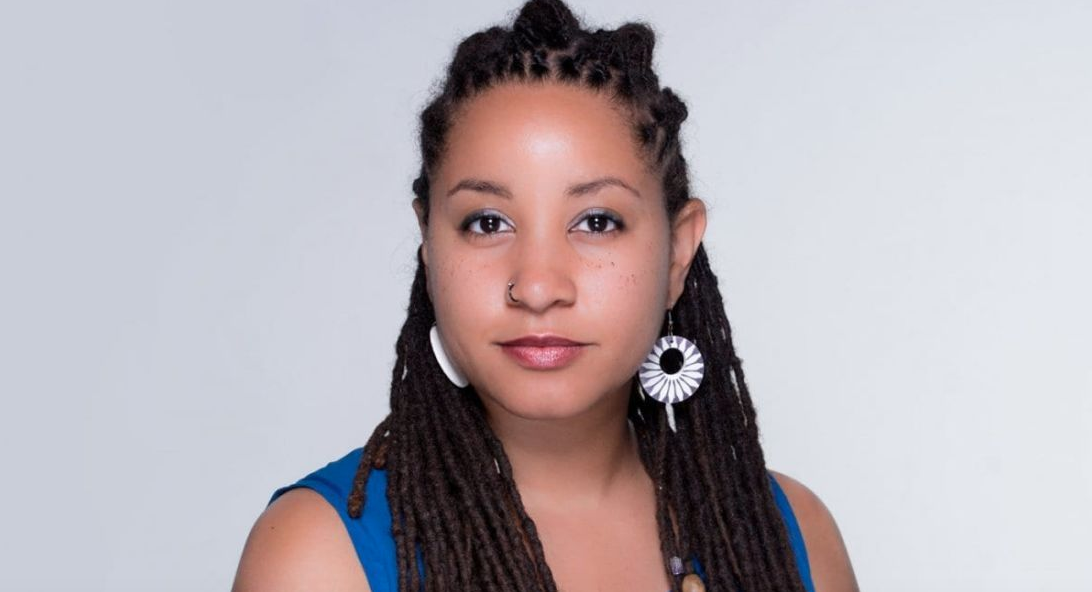
Photo: Lacy M. Johnson; credit: John Carrithers

Worth the Wait

“On the average Tuesday morning most people are waiting in more than one way: waiting to get to their stop, but also waiting for news, for inspiration, for intervention, for a promotion, for a diagnosis, for breakfast,” writes Jordan Kisner in “Attunement” from her debut collection, Thin Places: Essays From In Between (Farrar, Straus and Giroux, 2020). In the essay, Kisner writes about phases of her life spent in suspension, waiting for God, an epiphany, meaning, and for clarity of conviction to “come crashing through the ceiling.” Write a personal essay about a time when you waited for something philosophical, spiritual, or emotional to reveal itself, perhaps juxtaposing it with another memory of waiting for something more practical and tangible. Was there clarity that made it worth the wait?

A Very Last-Second Poetry Reading

It’s been a hard week for many of us who were and are considering attending the Association of Writers & Writing Programs (AWP) conference in San Antonio, Texas. Although the AWP Board of Directors announced its decision to move forward with the conference despite concern about the coronavirus in San Antonio, Poets & Writers has made the difficult decision not to attend, and I will also not be attending. Over a hundred panels and events have been canceled leaving many writers across the country seeking alternatives, leaving it up to us writers to find a way to hold community.

In the past couple days, the literary community on Twitter was left hanging in anxious suspense as we awaited a statement from AWP, and word from one another about individual decisions. In that time frame, #AWPVirtualBookFair was created along with a community Google Doc that lists presses and the discounts they are offering for books that were to be sold at the conference—it’s a digital book fair!

In addition, on Tuesday afternoon, I got word from Tariq Luthun that he is working with Christin Lee at Room Project to put on what is being called “A Very Last-Second Poetry Reading and Tiny Book Fair.” We are calling this an “offsite” AWP reading and it will feature Brittany Rogers, Rachel McKibbens, and many more. The event will be held on Friday, March 6 at 7:00 PM at Room Project. If you are in Detroit, come by!

And if you are traveling to AWP, please be safe and take every precaution.

Justin Rogers is the literary outreach coordinator for Poets & Writers in Detroit. Contact him at Detroit@pw.org or on Twitter, @Detroitpworg.

Spaghetti With a Side of Noise

“It is a very old sound, the sound of people who decided to sit in the same sheltered space for a few hours, with food and drink in front of them, their family or friends at their side, and forget about the snarling beasts they battled all day,” writes New York Times restaurant critic Pete Wells in defense of noisy restaurants. “There is the skipping, questioning rhythm of flirtation; the confident bleat of people showing off money; the squawk of debate.” Write a story that takes place amidst the hustle and bustle of a meal in a noisy restaurant. How do the words spoken by other diners and restaurant staff, and the ambient sounds of moving bodies and food being served, intertwine with the interactions of your characters?

Romeo and Juliet and Me

At the Poetry Foundation’s Harriet blog, Ruby Brunton writes about Elaine Kahn’s collection Romance or The End (Soft Skull Press, 2020), whose first poem, “ROMEO & JULIET & ELAINE,” has a speaker who inserts herself into Shakespeare’s iconic love story. “There aren’t ‘good guys’ and ‘bad guys’ in Kahn’s game of love, only flawed humans who make mistakes even when trying their best not to. The book plunders traditional love story tropes to offer a more authentic, and sometimes more cynical, counternarrative.” Write a poem in which you insert yourself into a famous relationship from literature. Do you approach your intrusion through a lens of different cultural customs, or perhaps a more open-minded approach to perspectives on love, loneliness, or sexuality?

Deadline Approaches for the Permafrost Book Prize in Poetry

The annual Permafrost Book Prize is open for submissions. Sponsored by Permafrost Magazine, the northernmost literary magazine in the U.S., the prize is awarded in alternate years in poetry, fiction, and nonfiction. In 2020, the prize will be awarded to a poet. The winner of the contest will receive $1,000 and publication by the University of Alaska Press.

Using only the online submission system, submit a poetry collection of at least 50 pages with a $20 entry fee by March 15. Poet and naturalist Elizabeth Bradfield will judge. Visit the website for complete guidelines.

The winner will be notified by May 2020. Previous winners of the journal’s book prize in poetry are Gail C. DiMaggio and Adam Tavel. Established in 1977, Permafrost is run by the graduate students of the creative writing MFA program at the University of Alaska in Fairbanks.

What’s Cooking?

2.27.20

In the Paris Review Daily’s Eat Your Words series, Valerie Stivers creates recipes inspired by food references in literature. Writing about her favorite Hilda Hilst novel, Letters From a Seducer (Nightboat Books, 2014), translated from the Portuguese by John Keene, Stivers mentions the eccentric ways food is incorporated into the text: “Blouses smell of apples; people sell clams, oysters, coconuts, hearts of palm, dried meat; a penis is a giant chorizo or a ‘wise and mighty catfish’ or a strawberry.” Write an essay that incorporates the shapes, smells, textures, and connotations of food in an unexpected way. What comes to your mind when considering the skins, peels, fat, seeds, flesh, pulp, nubs, and bones from your meals?

Poet of the Spirit: Sunni Patterson

To conclude my Black History Month themed posts, I interviewed poet Sunni Patterson. Patterson was instrumental in giving voice to New Orleans through her poetry after Hurricane Katrina. The performance of her poem “We Made It” on HBO’s Def Poetry Jam has over six hundred thousand views on YouTube. In many ways Patterson has become the face of New Orleans spoken word.

How has New Orleans shaped your poetry?
When you’re born and raised in New Orleans, you can’t help but have poetry in your bones. Even if you don’t know what it is, or what to call it, it’s there. From the way a story is told, the sayings, the anecdotes—all of it shapes my artistry. I know the music, air, culture, thickness of the city contributes to the sound of my poems.

Take us back to your appearance on Def Poetry Jam in 2007, what was that moment like for you?
I was asked to do it years before that performance. For some reason, I didn’t want to do it. Fast forward to after Hurricane Katrina. I’d just finished speaking at the University of Houston when I got the call from producers. I agreed immediately! I knew my voice and point of view about Hurricane Katrina and its impact on the city and residents needed to be heard.

I had no clothes after Katrina. A box of clothing from a church in Houston was sent to me. Most of the things I didn’t keep. I kept a crop top. I already had some denim material I wanted to use. I was leaving the next day, I called Mama Rukiya, she sewed something quickly with mudcloth and made detachable sleeves. Chile, I was sewing myself into the dress until it was time to go on stage! The needle and thread were still in the seams. It was a great experience.

Who are some of your poetry influences?
Ayi Kwei Armah, Lucille Clifton, Jayne Cortez, Neville Goddard, Zora Neale Hurston, Acklyn Lynch, Brenda Marie Osbey, Arturo Pfister, Rumi, Kalamu ya Salaam, Mona Lisa Saloy, and Sonia Sanchez.

What message do you have for the future writers of New Orleans?
My hope for the next generation of writers is to have hope. To hold the light. To honor the ancestors, elders, culture, children, and spirit of the city, but most importantly, to do the ugly, yet necessary, work of the heart. Those are the things that’ll keep them and us alive.

Sunni Patterson. (Credit: Gus Bennett, Jr. / 2016 New Orleans People Project)
 
Kelly Harris is the literary outreach coordinator for Poets & Writers in New Orleans. Contact her at NOLA@pw.org or on Twitter, @NOLApworg.

Recurring Character

2.26.20

“There is sort of a recurring character with different names, this extremely self-possessed, undereducated person. There’s absolutely an element of autobiography there,” says Emily St. John Mandel in a profile by Michael Bourne in the March/April issue of Poets & Writers Magazine. Bourne describes the different iterations of heroines that have surfaced again and again in each of Mandel’s novels: “The figure of the rootless young woman with few worldly possessions beyond a fierce intelligence and a certain relentlessness.” Think of a character from a short story you’ve written in the past who possesses certain personality traits based on your own, and resurrect this character for a new story. Which characteristics remain intact and which are more dispensable?

Pages

Subscribe to RSS - blogs