Street Naming

5.29.14

Legendary jazz musician Miles Davis lived on West Seventy-Seventh Street in New York City for almost twenty-five years. This past Memorial Day, on what would have been his eighty-eighth birthday, a street sign was unveiled on the corner of West Seventy-Seventh Street and West End Avenue to rename the block "Miles Davis Way." This week, think about the roads that are important to you and your family—the ones on which you have lived, the ones that have taken you away, the ones that are etched permanently in your memory. Is there a street corner somewhere that should be named after your mother, your brother, or you? What makes it special? It could be the road on which you learned to drive, the one you swear you could drive with your eyes shut, or perhaps the one on which something happened that changed the course of your life.

Pet Matchmaker

5.28.14

There's an old adage that people tend to resemble their pets. This could be due to the law of attraction, which many people believe is at play when we look for a partner, and which suggests that we tend to feel more comfortable with those with a similar appearance and who share similar interests. What if there was a service available for people looking for their perfect pet match? Write a scene in which a character visits a "pet matchmaker," a professional who consults with clients on what they value most in a pet, and then conducts a search to help them find "the One."

Winners on Winning: Paisley Rekdal

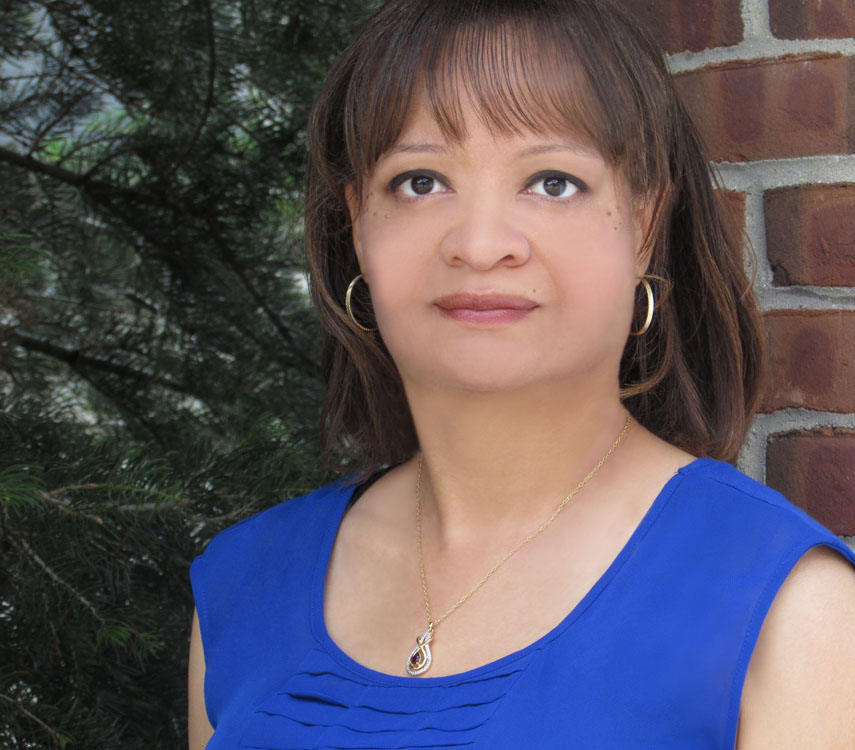
For the seventh installment of our Winners on Winning series, we spoke with Paisley Rekdal, the winner of the 2013 University of North Texas Rilke Prize for her poetry collection, Animal Eye, published in 2012 by the University of Pittsburgh Press. The $10,000 prize is given annually to a midcareer poet. Animal Eye was also a finalist for the Kingsley Tufts Poetry Prize and the Balcones Poetry Prize. Rekdal's previous books include an essay collection, The Night My Mother Met Bruce Lee; a hybrid-genre memoir, Intimate; and three previous books of poetry, A Crash of Rhinos, Six Girls Without Pants, and The Invention of the Kaleidoscope. She teaches at the University of Utah. 

What kind of impact has winning the Rilke Prize had on your career?
The Rilke Prize relieved me of certain fears about the current direction of my writing, in particular the kinds of aesthetic interests and experiments with which I was, and am now, engaged. That kind of validation is probably the biggest reward any prize can give, outside of a sudden influx of cash. In terms of connections, the Rilke prize put me in direct contact with Bruce Bond, Corey Marks, and Lisa Vining at UNT, which led to some wonderful conversations over my week there about art and reading, the state of the lyric, and the best place to buy cowboy boots. As for what the prize itself allowed me to do financially, it helped pay for a new roof, which (considering my bathroom ceiling that winter was literally uddered with snowmelt-filled paint balloons) was a true blessing.

Has winning this award, or previous awards, changed the way you approach your work?
Like any good American or egomaniac, I love awards, but I can't write for them. I don’t think anyone does. In terms of the seriousness with which I take my work, however, prizes have certainly given me the confidence to be more ambitious.

Have you ever entered a contest that you didn't win?
I can’t begin to list all the contests that I’ve entered and haven’t won. The upside of being a 95% loser, 5% winner (if I’m lucky that year) is that I’ve learned how to brush off the rejection and continue to write, even within hours of a serious disappointment. Disappointment is, in fact, a great thing for a writer (if by "great" we also mean "getting kicked in the groin"), since it forces you either to learn how to enjoy the writing process itself or give up. Over the years, I’ve also been a judge for small and large contests across the nation, and these experiences have taught me that, once you’ve winnowed the best manuscripts down to a small handful, picking a single winner is frighteningly arbitrary. Being a finalist or semifinalist really is a good sign, as I tell my students: it means that your skills are recognizable, even if they aren’t the ones the judge-of-the-moment loves most.

What advice would you offer to writers thinking of submitting to writing contests?
Gird your loins. And take nothing—whether it’s failure or success--personally.

For more Winners on Winning, read the current issue of Poets & Writers Magazine, and check back here every Wednesday for a new installment.

Underwater

5.27.14

Have you ever thought about what it would be like to live underwater? How would the days be different? Imagine a scenario in which humans have adapted to underwater life, and write a poem about what such a life would be like. Consider the kinds of evolutionary changes that would need to occur (gills, webbed hands and feet, etc.), the new predators to face, and the new scenery to enjoy.

Deadline Approaches for Thurber House Residency Award

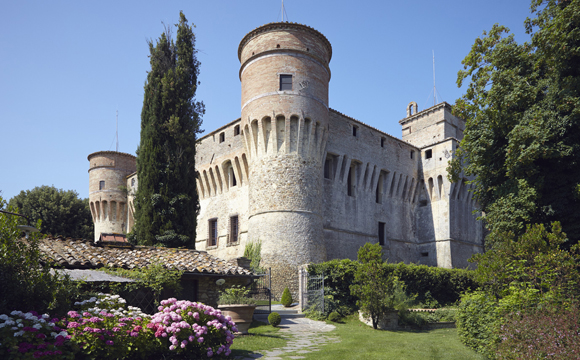
Submissions are currently open for the Thurber House’s John E. Nance Writer-in-Residence award. The four-week residency is offered from September to October 2014 to a fiction writer or nonfiction writer who has had a book published within the past three years. The resident will be provided with a $4,000 stipend and a two-bedroom apartment in the former home of fiction writer and cartoonist James Thurber in Columbus, Ohio. Travel and food are not included. The resident is also asked to participate in three community outreach activities offered by the Thurber House, such as giving readings or teaching writing classes.

To apply, submit two copies of a book published in the past three years, along with three short stories, essays, or chapters of a novel or book of nonfiction with an optional table of contents totaling no more than 50 pages by June 2. There is no entry fee. Self-published books are not eligible. Submissions should be mailed with the required entry form to Thurber House, 77 Jefferson Avenue, Columbus, OH 43215. The resident will be chosen by July 7.

Born and raised in Columbus, Ohio, James Thurber (1894-1961) was a prolific humorist, short story writer, and cartoonist. Though he spent most of his career in New York City, Thurber attended college in Ohio and worked at the Columbus Dispatch as a reporter from 1920 to 1924. He is buried in Columbus’s Greenlawn Cemetery.

Established in 2012 by Sally Crane, the annual John E. Nance Writer-in-Residence award is named after John Nance, a photojournalist who was the Thurber House writer-in-residence in 1995 and 1998. Previous residents include fiction writer Katrina Kittle and creative nonfiction writer Liza Monroy.

Top Five Albums

5.22.14

In Nick Hornby's novel High Fidelity, the main character, music enthusiast Rob Fleming, is fond of making top-five lists. This week, think about your five favorite albums. Whether it includes a record your mother used to put on when you were young, or the soundtrack to your daily commute, think of the music that shaped you, bolstered your spirit, and comforted you in trying times. Make a top-five list of your own and write about why each album is important to you. If you are having difficulty picking entire albums, try choosing individual songs instead.

Winners on Winning: Harmony Holiday

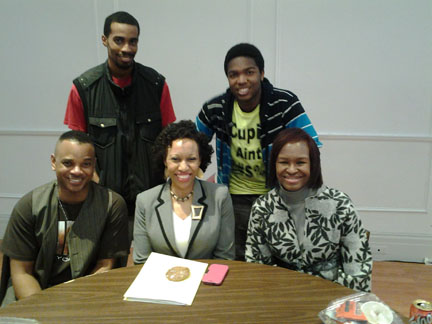
For the sixth installment of our ongoing Winners on Winning series, we spoke with Harmony Holiday, the winner of a 2013 Ruth Lilly Poetry Fellowship, a $15,000 award given annually by the Poetry Foundation to five emerging poets between the ages of twenty-one and thirty-one. (Starting this year, thanks to a donation from the Dorothy Sargent Rosenberg Memorial Fund, the prize amount will increase to $25,800 each.) Holiday's debut collection of poems, Negro League Baseball (2011), won the Fence Books Motherwell Prize. Her second collection, Go Find your Father/A Famous Blues, was published by Ricochet Editions in 2013.

What kind of impact has winning this prize had on your career?
I’m someone who’s deeply suspicious of the road most traveled by writers in our time—from the brave and often dejected or shrill dream of becoming a writer, to an MFA program and the connections and lexicon that come with it, and then ideally to publishing and teaching. I’m grateful for the fact that structures exist that help writers earn livings during these twilight years of monopoly capitalism, but I am constantly interrogating the path, wondering whether or not something is lost in the transition from training to sheer being. And while it’s possible that I romanticize a time when a writer’s biography was not as predictable, it’s also true that such a time called for less of a costume or spiel, and perhaps helped preserve the diversity and exhilaration of the unknown that made a writer’s life worth writing about. I admire writers like Amiri Baraka who, while understanding and operating within the current structure, also danced around it toward greater agency and creative freedom, creating independent presses, collectives, and ultimately, ideas that cannot be born within the obscuring anatomy of the western canon as it stands. It seems to me that the way that the academy has emerged as the number one source of training in the literary arts is at once heartening and a very complicated puzzle, meaning we all know that a specific aesthetic is born within the confines of these universities, and that even the wildest and freshest writing is manicured into something that can be explained in the terms that an MFA education allots—too much savviness perhaps, lots of know-it-all-ism and unassailable writing seems to come from that, lots of good writing too of course, but things could stand to be re-apportioned.

All of that said, winning the Ruth Lily, knowing that the Poetry Foundation is a strident and unrelenting champion of writers who take the road less traveled, I’ve been re-inspired to maintain my position on that road, even if it the resistance I put up is only in the form of archival work that re-distributes the wealth of the canon, or the deeper study of jazz and other music, or the continued study/practice of dance and application of its tenets in my writing—it’s a huge relief to be reminded of the importance of paving this road without over-defining it, the importance of freestyling, while realizing that too much resistance can undermine and too little might as well be none at all.

Additionally, my new book Go Find Your Father/A Famous Blues, was born of the energy and inspiration that the award provided. It began as a lyric essay and evolved into a book length collection of poems, letters, and essays, a memoiresque suite of work that might have been thwarted by fear about where it would fit into the canon, or about what genre it is, had the award not been the reminder I needed to just go forth and make the best and most inspired work I can make.

Has winning this award, or previous awards, changed the way you approach your work?
Not necessarily, no. I think winning things refines my idea of what winning really is. Each time you realize it’s not about anything you tried to prove to judges or yourself, it’s about the fact that you were in a natural, almost inevitable, place where your writing and ideas were concerned, that you can’t ever fake or contrive that, so that the goal remains to continue to approach writing and living from that raw, natural, this-is-me take-it-or-leave-it place. 

Have you ever entered a contest that you didn't win?
Absolutely, but I try to think of rejection as some kind of mythic, fableistic deity gifted to us by the ancients, that sort of educates us in the ways we have rejected ourselves thus far, the nuanced place wherein we have not been true to ourselves. Meaning, sometimes we know we’re too young for a Guggenheim, but apply anyway because why are we too young, after all? Or sometimes we’re clear that a certain magazine privileges narrative work, and we send something a little decentralized from that aesthetic, knowing what to expect, but also hoping we might rouse people to a new way of seeing simply by showing up. I think that’s a healthy way to interrogate both ourselves and the cult of normativity that suggests what’s appropriate for when and why. If we’re always playing it safe, if we’re always winning, we’ve rigged our own contest with our best self, we’ve lost the will to exceed ourselves, and that’s no way to win.

What advice would you offer to writers thinking of submitting to writing contests?
What are you waiting for? Write and read and listen and use your body every day, don’t make applying to or winning contests your raison d’être, but also don’t just talk about it, be about it.

For more Winners on Winning, read the current issue of Poets & Writers Magazine, and check back here every Wednesday for a new installment.

Sunday Drivers

5.21.14

Driving can serve several different purposes. In the most basic sense driving facilitates transportation from point A to point B, but it can also be a job, a sport, and even a form of relaxation. When highways sprang up across the U.S. in the 1950s and 1960s, so-called “Sunday drivers” cruised down these new open roads to decompress and take it easy—an activity that can be hard to fathom in the age of road rage. This week, try writing a scene with two or more characters in the car together on a Sunday drive. Maybe the drive doesn’t wind up as peaceful as the group expected. Or, maybe it gives them the perfect setting to work through a problem and come to a long-awaited solution.

Abecedarian

5.20.14

Abecedarian poems begin with the first letter of the alphabet, and each successive line or stanza begins with the next letter until the final letter is reached. Before you lump this form in with those acrostic poems your middle-school English teacher made you compose using the letters of your name, give it a chance. If you're not sure what to write about, or feel like everything you're producing sounds the same, try this strict form to help break free from the creative constraints of your usual words and phrases. For more information consult poets.org. Who knows? You might become so taken with the form that you decide to write an entire collection of abecedarian poems, like Harryette Mullen's Sleeping With the Dictionary.

A Poet's Place: Ruminations at Fresno's P&W Roundtable

Poets & Writers Literary Roundtable meetings are great opportunities to connect with fellow presenters, presses, teachers, and writers. They bring together people from all aspects of the local literary community to share ideas, news, and resources, and possibly form partnerships. It's also a chance for members of the community to learn more about P&W and how its Readings & Workshops program might support their literary events. Brandi M. Spaethe, program assistant at P&W Readings & Workshops (West), blogs about a meeting in Fresno, California.

Fresno Roundtable

When I went to the Poets & Writers’ Fresno Roundtable meeting on March 27, I was excited to return to the place where I received my MFA in poetry last May. One thing I told Jamie Asaye FitzGerald, director of the Readings & Workshops Program (West), on the drive up was that not only does Fresno have a rich poetic history, but it also continues to be home to a strong and diverse literary community. It’s a place where inhabitants stick around because they are passionate about their projects and the city. Fresno is a place that wants to be loved.

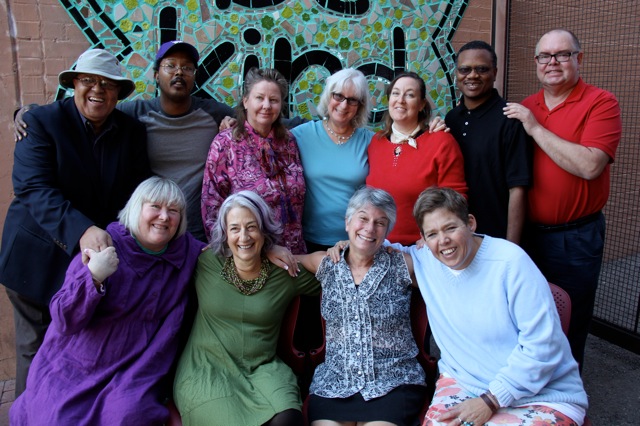
In attendance was Fresno’s poet laureate, James Tyner, who runs a reading series at the Gillis Branch Public Library in Fresno. Tyner was elected Fresno’s first poet laureate in the fall of 2012. S. Bryan Medina came to discuss his new baby, the Inner Ear Poetry Jam, which features slam poets in the area. Medina told us that the slam community in Fresno has been alive for roughly twelve years, a fact not widely known. Michael Medrano, who was a P&W writer-in-residence for the Readings & Workshops blog in July 2013, has been an important member of the local literary scene with his Random Writers Workshop series that meets monthly in Fresno. Others in attendance included an agent, local literary enthusiasts, and a new member who had recently relocated.

One question we all wanted to explore: What drives Fresno's passion for the arts? What is it about Fresno that attracts writers? Well, it’s not a glamorous place. Fresno is very much a working-class city, they agreed, a place about work. Former United States Poet Laureate Philip Levine has spent a number of years teaching, writing, and living in Fresno and is well-known for writing about Detroit's working-class. This city is a realist city. Its faults are right on the surface and many of its citizens come from blue-collar backgrounds. A strong work ethic, a powerful drive, and sweat breaking over your back can remind you that you're human. That your body is capable of affecting and destroying and building again—if you spend enough time in Fresno you can see it. You can see it in the poetry.

The other thing that drives Fresnans is that they must fight for the arts. Cindy Wathen, treasurer at the Fresno Arts Council, shared with us that there’s just no budget for the arts, thus all efforts are grassroots. A few attendees spoke out about how fighting for your art creates a strong sense of identity, a sense of ownership and pride that comes with building your own establishment. As the largest Central Valley city, Fresno boasts a variety of agricultural communities, folks who have watched the land change and bear new fruit each year, some natives working directly to cultivate the crop. The arts, too, are nourished in this way.

One thing I noticed about my own time in Fresno is how separate the university and the locals were in their literary endeavors. Often the local writers would host events and some students would come, and vice versa with the MFA student events through Fresno State, but crossover was rare. There exists two camps: the nonacademic writer and the academic writer. "In what ways can the two come together?" we wondered. What are some events we'd like to see in Fresno that might bridge the gap? Some suggested a writers conference inclusive of non-academic writers, others mused that a retreat or publication would be a good addition to the scene. Annual show? Fringe festival? Excitement began to build in the room.

Fresno has been a poet’s place. It still is a poet’s place. Folks often forget about it, and the city itself has developed a reputation in the nation for being something that it’s not to the native. There’s a real sense of community there.

I am sitting at the dinner table, rolling a hot dog
into a corn tortilla, boiled beans and white rice,
the air growing smokey from the tri-tip barbequing
outside, my cousin bringing in a plate of pan fried
noodles from the place down the street.

I am home.

I am Fresno.

—James Tyner, "Fresno, California. 2013."

Photo: Fresno Roundtable Attendees  Credit: Jamie Asaye FitzGerald

Major support for Readings & Workshops in California is provided by the James Irvine Foundation. Additional support comes from the Friends of Poets & Writers.

Pages

Subscribe to RSS - blogs