The Anthologist: A Compendium of Uncommon Collections
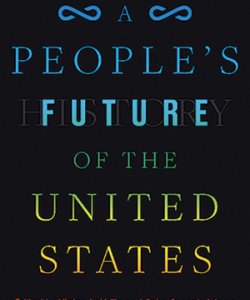
A round-up of four new anthologies, including A People’s Future of the United States: Speculative Fiction From 25 Extraordinary Writers edited by Victor LaValle.
Tags:
Jump to navigation Skip to content
A round-up of four new anthologies, including A People’s Future of the United States: Speculative Fiction From 25 Extraordinary Writers edited by Victor LaValle.

Ten of the best retreats, workshop programs, conferences, and festivals for emerging writers across the country.
Twenty-two writers, including Alexander Chee and Rebecca Makkai, offer their personal take on the best retreats for productivity, motivation, networking, and more.
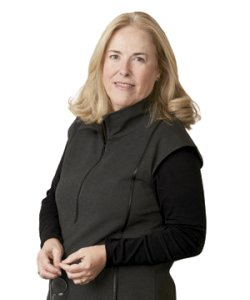
After twenty-two years as the executive director of the MacDowell Colony, Cheryl A. Young discusses the future of the prestigious residency program.

The first lines of a dozen noteworthy books, including Casting Deep Shade by C. D. Wright and The White Card: A Play by Claudia Rankine.
Writers: The deadline approaches for several writing fellowships and contests. Each contest offers a prize of at least $1,000 and is open to poets, translators, or writers of fiction and nonfiction.
Salem State University’s Claire Keyes Poetry Award: A prize of $1,000 and publication in Soundings East is given annually for a group of poems. Sean Thomas Dougherty will judge. Entry fee: $10. Deadline: February 15.
New American Press Poetry Prize: A prize of $1,000 and publication by New American Press is given annually for a book of poetry. Sara Gelston will judge. Entry fee: $25. Deadline: February 15.
Hidden River Arts Willow Run Poetry Book Award: A prize of $1,000 and publication by Hidden River Press is given annually for a poetry collection. Entry fee: $22. Deadline: February 15.
Ruminate’s William Van Dyke Short Story Prize: A prize of $1,500 and publication in Ruminate is given annually for a short story. Entry fee: $20. Deadline: February 15.
Cagibi Macaron Prize: Three prizes of $1,000 each and publication in Cagibi will be given annually for a group of poems, a story, and an essay. Major Jackson will judge in poetry, Chantel Acevedo will judge in fiction, and Sheila Kohler will judge in nonfiction. Entry fee: $18. Deadline: February 15.
Furious Flower Poetry Prize: A prize of $1,000 and publication in Obsidian, the literary journal of Illinois State University, is given annually for a group of poems that explore Black themes. A. Van Jordan will judge. Entry fee: $15. Deadline: February 10.
Hippocrates Prize for Poetry and Medicine: A prize of £1,000 (approximately $1,300) and publication in the Hippocrates Prize anthology and on the website is given annually for a poem on a medical theme. A prize of £1,000 is also given for a poem on a medical theme written by a health professional. Entry fee: $10. Deadline: February 14.
Center for Fiction’s New York City Emerging Writers Fellowship: Fellowships of $5,000 each, membership to the Center for Fiction in New York City, and access to writing space at the center are given annually to fiction writers living in New York City who have not yet published a book of fiction. Entry fee: None. Deadline: February 15.
Milkweed Editions Ballard Spahr Prize for Poetry: A prize of $10,000 and publication by Milkweed Editions is given annually for a poetry collection by a poet currently residing in Iowa, Michigan, Minnesota, North Dakota, South Dakota, or Wisconsin. Entry fee: None. Deadline: February 15.
Academy of American Poets Ambroggio Prize: A prize of $1,000 and publication by Bilingual Press/Editorial Bilingüe is given annually for a book of poetry originally written in Spanish by a living writer and translated into English. The poet and translator will split the prize. Rosa Alcalá will judge. Entry fee: None. Deadline: February 15.
Sarabande Books Morton and McCarthy Prizes: Two prizes of $2,000 each and publication by Sarabande Books are given annually for collections of poetry and fiction. Each winner will also receive a two-week residency at the Blackacre State Nature Preserve and Historic Homestead in Louisville, Kentucky. Sarah Gorham and Jeffrey Skinner will judge both prizes. Entry fee: $29. Deadline: February 15.
Center for Documentary Studies Documentary Essay Prize: A prize of $3,000 is given biennially for an essay that demonstrates a “reliance on documentary methods, specifically immersive fieldwork, research, and interviewing conducted over periods of time.” The winning essay will be featured in the center’s print and digital publications and will also be placed in the Archive of Documentary Arts at the Rubenstein Library at Duke University. A panel of writers, editors, and documentary artists will judge. Entry fee: $50. Deadline: February 15.
Academy of American Poets Raiziss/de Palchi Fellowship: A fellowship of $25,000 and a five-week residency at the American Academy in Rome is given biennially to a U.S. translator for a work-in-progress of modern Italian poetry translated into English. Maria Frank, Giorgio Mobili, and Michael Palma will judge. Entry fee: None. Deadline: February 15.
Visit the contest websites for complete guidelines, and check out Grants & Awards database and Submission Calendar for more contests in poetry, fiction, and creative nonfiction.
When does a ride to the airport mean more than a ride to the airport? In her New York Times Magazine Letter of Recommendation essay, Jacqueline Kantor refers to the idea that the offer to drive someone to the airport often holds signification in romantic relationships and friendships. Write an essay about a mundane task or practical favor that you have done as a gesture of your burgeoning feelings for someone. Did the recipient note the significance of the act? Was it the beginning of a new chapter in your relationship?
Red Mountain Press offered two- and four-week residencies from November 14 to December 12 to poets, fiction writers, and creative nonfiction writers in a private home on Sanibel Island, Florida. Residents were provided with private lodging, dinners, and access to a shared kitchen. There was no cost to attend the residency. Using only the online submission system, writers submitted up to 10 pages of poetry or up to 15 pages of prose, a project proposal, a curriculum vitae, and a $35 application fee by July 31. Visit the website for more information.
Red Mountain Press Writers’ Retreat, P.O. Box 32205, Santa Fe, NM 87594.
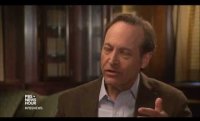
“It is a map of how this writer had to break many barriers to find not a room of her own, but a house of her own.” Sandra Cisneros speaks with PBS NewsHour’s Jeffrey Brown about her essay collection, A House of My Own: Stories From My Life (Knopf, 2015), her path to writing, and what home means to her. Cisneros was recently named the winner of the 2019 PEN/Nabokov Award for Achievement in International Literature.
Last November, over five hundred pieces from the art collection of Patricia and Donald Oresman were auctioned off in New York City, including work by Roz Chast, Allen Ginsberg, William Kentridge, Jacob Lawrence, and David Wojnarowicz. What is unique about the couple’s collection is that all of the drawings, paintings, and photographs depict a common subject: They are all portraits of someone reading. Inspired by this singular focus, write a series of vignettes that all explore a shared subject or theme. Experiment with different styles, perspectives, or tones to create a multivalence in your collection.