Genre: Creative Nonfiction

Returning Soldiers Step Up to the Mic

Leilani Squire's poetry and short shorts have been published in magazines including the Sun, Eclipse, and Gentle Strength Quarterly. She has been a featured poet with the Valley Contemporary Poets, Alex Frankel’s Second Sunday Series, and at Beyond Baroque, and is at work on her first novel. Squire facilitates creative writing workshops for veterans at the Greater Los Angeles Veteran’s Hospital, Wellness Works in Glendale, California, and online for bookscover2cover. She is the senior editor of Returning Soldiers Speak: An Anthology of Prose and Poetry by Soldiers and Veterans (Bettie Youngs Books, 2013) and is the founder and director of the annual event Returning Soldiers Speak: An Evening of Prose and Poetry, a venue for veterans and soldiers from different wars and conflicts to read their poetry and prose to the community. 

Returning Soldiers Speak 2014

I began working with veterans four-and-a-half years ago, with the goal of helping them write about their experiences so that they can heal from the wounds of war; and for those who haven’t been on the battlefield, to begin the process of integrating back into society after their military experience. I facilitate creative writing workshops and work with veterans from the Korean War through Operation Enduring Freedom.

On November 8th, the fifth annual Returning Soldiers Speak: An Evening of Prose and Poetry reading was held at Beyond Baroque in Venice, California. People from all sectors of society and from Los Angeles, San Diego, and Riverside counties, came to hear the veterans read. Veterans from Arkansas, Oceanside, the Mojave Desert, and Los Angeles read their prose and poetry.

The reading began with a letter written during the Korean War by a Navy Seaman deployed on an aircraft carrier telling about the birth of his daughter. Then, stories of the Vietnam War were told: how photos were not taken out of respect for the dead, how a corpsman was embedded with the Marines doing humanitarian work in Vietnamese villages, the gritty reality check of a soldier humping through treacherous Ashau Valley, and of another soldier loading bombs into an airplane. As I listened to the Vietnam veterans read, I sensed I was witnessing something extraordinary. I was in the presence of combat soldiers, who lived in and through war. And their stories touched something primordial within. It was an honor.

The audience was grateful for the breadth of humor that followed, with stories about how to survive in the jungle, the benefits of boot camp, and the lighter, satirical side of being a woman in the military. Others spoke about more recent events. Two combat veterans read about their experiences during the Gulf War. A woman veteran read an excerpt from her memoir about how her superior officer repeatedly raped her and how she kept silent for fear of being dishonorably discharged. The Operation Iraqi Freedom generation read about the challenges of posttraumatic stress disorder, suicide, and what it means to come home and integrate back into society.

One of our favorite readers from Returning Soldiers Speak, James Mathers, passed away this summer. A conscientious objector during the Vietnam War read a short piece called “Poet Time” written by Mathers. The last sentence goes: “If we’ve got any poets out there, now’s the time to step up.” These words were an inspiration and validated the evening’s event by giving the veterans and the audience, permission to write and tell their stories. It was a perfect way to end the reading.

For the first time, because of the generosity of Poets & Writers, Returning Soldiers Speak was able to give the veteran-writers a stipend for reading. We gathered on the staircase in Beyond Baroque’s foyer. I announced their names like roll call and distributed their checks. They were so grateful and proud. And so was I.

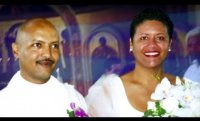
Photo: Leilani Squire (at left) with P&W–supported readers from Returning Soldiers Speak. Credit: Chuck Smallwood.

Major support for Readings & Workshops in California is provided by the James Irvine Foundation. Additional support comes from the Friends of Poets & Writers.

Making New Friends

12.18.14

An old song goes: “Make new friends but keep the old, one is silver and the other gold.” Does making new friends come naturally to you, or is it easier said than done? Do you use social media sites like Facebook to make new connections, or do you prefer to meet new people at social events? This week, write a personal essay reflecting on how you get to know people, and how they become a part of your life. 

Writers Recommend: Music and Movies

by Staff
12.16.14

Culled from our Writers Recommend series, the music and movies that inspire authors to keep writing, with recommendations from Sandra Beasley, Chloe Caldwell, Scott Cheshire, Joshua Henkin, and others.

A Day in the Life

12.11.14

This week, look at a day in your life through the eyes of an ancestor. How would your grandmother react to the e-mails you get at work? How would your great-great-grandfather navigate modern public transportation? Write a diary entry in the voice of someone from an earlier generation. Consider the cultural norms of the time period your ancestor grew up in as well as his or her personality. Focus on the surprising similarities in your daily lives for a challenge.

Words After War at Canisius College

Brian Castner is the author of The Long Walk (Doubleday, 2012), an Amazon Best Book of 2012 and Chautauqua Literary & Scientific Circle selection for 2013. His writing has appeared in Wired, the New York Times, the Los Angeles Review of Books, Outsideand on National Public Radio. Castner is the co-founder of Buffalo, Books & Beer, a new literary series in his hometown of Buffalo, New York.

We’re all still learning how to come home from a war. Veterans struggle to readjust, civilians and family wonder how to welcome back their changed loved ones. We shouldn’t be so hard on ourselves; Odysseus had trouble, too.

This truism of history still applies: Every veteran saw their own war, had their own individual experience, were exposed to their own proportion of terror and transcendence, and deal with their own mix of pride and regret. It follows, then, that no single national program or strategy will best welcome home all these men and women.

For some veterans, though, writing helps. Trauma therapy for some, but for most, just a human need to share an experience with others. The same could be said for the country at large, of course; narrative helps all of us make sense of our lives.

Inclusivity. This is what spurs Words After War, a literary nonprofit based in New York City, to organize workshops and events around the country. Rather than focusing on writing for a small circle of military peers, Words After War instead creates opportunities for veterans and civilians to speak to each other. It’s an effort to bridge the civilian-military divide, one story at a time.

This past semester, with support from Poets & Writers, I led a Words After War workshop on the campus of Canisius College in Buffalo, New York. On Tuesday evenings, war was a lens through which to read and write and think about the same topics that have always preoccupied writers. Many traditional workshops use this lens model, we simply considered violence and its aftermath instead of environmentalism or realism or faith or any other typical construct. 

There is no good writing without good reading, so we started each session with Whitman or Hemingway or Vonnegut or Klay (who visited our class just weeks before he won the National Book Award). We studied classics, but also new work from Siobhan Fallon, Brian Turner, and Hassan Blasim, and two post-Vietnam books, Qais Akbar Omar’s A Fort of Nine Towers and Larry Heinemann’s Paco’s Story. What better way to start than to put great sentences—moving sentences, jarring sentences, and imperfect sentences—in everyone’s ears? An ice-breaker, for the workshopping that followed.

I’d like to think that the strength of our program is to be found in the stories we wrote and the precision and quality of the feedback we provided each other. To judge our success in bridging the civilian-military divide, we could parse the demographics of our group (five veterans/six civilians, four women/seven men, three graduates of creative writing programs, three retirees, a lawyer, a photographer, a poet, an anthropology professor, a magazine editor, an author of four books, one that had not written in decades), but I’d rather examine the work we produced.

Some stories you would expect from a veteran writing group—a nighttime raid in Afghanistan, a day on the gunnery range in basic training—but most may surprise. A dying grandmother who keeps a secret to the end of her life. A son with nightmares while his father fights in Iraq. Travels in Korea. A meditation in a snow-filled graveyard. We workshopped prose poems and flash fiction, chapters from novels, and a Civil War biography told through letters. Some stories had a military connection, but plenty did not; grief and love are grief and love, after all.  

In short, a veteran writing workshop looks a lot like any other serious literary class. Because at the end of the day, we’re all just trying to produce good writing; Hemmingway’s one true sentence.

Photo (top): Don Bond, Brian Castner at a teaching workshop. Photo (center): Brittany Gray. Photo (bottom): Marilyn Rochester. Photo Credit: Words After War

Support for Readings & Workshops in New York City is provided, in part, by public funds from the New York State Council on the Arts, and the New York City Department of Cultural Affairs, with additional support from the Louis & Anne Abrons Foundation, the Axe-Houghton Foundation, A.K. Starr Charitable Trust and Friends of Poets & Writers. 

Shopping Season

12.4.14

First we had “Black Friday.” Then came “Cyber Monday,” and now, “Gray Thursday.” Holiday shopping is unavoidable, and these deal days have almost achieved a holiday status all their own. This week, write a short personal essay about your attitude towards holiday shopping. Do you look forward to it, or do you dread it? Do you plan to finish your shopping all at once, or do you space it out and plan ahead? 

Feasting

11.27.14

Thanksgiving is a holiday of abundance, good will, good company, and most importantly, good food. We all have our favorites—that platter or dish we set strategically in front of us and hope nobody asks us to pass. This week, write about the one item in your Thanksgiving feast that you look forward to every year. Is it something you make? If not, who usually makes it? Is it a secret family recipe? In an age when most dishes can be purchased or made on any day of the year, take a moment to reflect on how certain dishes become special. 

Simple Twist of Fate

11.20.14

Looking back, can you pick out a moment in your life that was altered by a simple action or pure happenstance? Perhaps someone you met under unfortunate circumstances (a fender-bender, at the doctor's office) ended up becoming a close friend of yours. Maybe, as a result of getting hopelessly lost, you discovered a diner that serves the best cherry pie you’ve ever had in your life.  This week, write an essay about one of these instances. Or, if you’ve had multiple experiences of this nature, try and string them all together in the same piece. 

The Hummingbirds of Elizabeth House

Marcia Arrieta blogs about her experience teaching a P&W–supported writing workshop series at Elizabeth House, a place of refuge for homeless pregnant women and their children in Pasadena, California. Arrieta is a poet, artist, and teacher, whose work appears in Of/with, Alba, Rivet, So to Speak, 13th Moon, Eratio, Catch & Release, Alice Blue, Melusine, Osiris, Web Conjunctions, Sugar Mule, Cold Mountain Review, Dusie, and the Last VISPO Anthology, among others. The author of one poetry book, triskelion, tiger moth, tangram, thyme (Otoliths, 2011), and two chapbooks, experimental: (Potes & Poets, 2000) and the curve against the linear/An Uncommon Accord (Toadlily Press, 2008), she received an MFA in poetry from Vermont College. Over the years, she has led numerous writing workshops at Franklin High School and John Adams Middle School in Los Angeles, and The Women’s Room and Centennial Place in Pasadena. Arrieta edits and publishes Indefinite Space, a poetry/art journal.

Marcia ArrietaIn the first poetry/writing workshop in a series sponsored by Poets & Writers at Elizabeth House in Pasadena, California, a young mother writes about a hummingbird:

She looked at me and then flew away.
That’s when I knew on the floor—I shouldn’t stay.

Five weeks later at the culminating reading and book publication of Writing from Elizabeth House, a hummingbird hovers in the center of the cover collage. The hummingbird, a symbol of goodness, sweetness, and light, became a symbol for us of perseverance, writing, and communication, as did Maya Angelou’s powerful poem “And Still I Rise.”

The mission of Elizabeth House is “to provide shelter, hope, and support to homeless pregnant women and their children, addressing the physical, emotional, spiritual, and economic needs in a nurturing atmosphere.”

When I first arrived there to lead my workshop, I learned that not only would I have eager, creative young women around the table, but also their babies—ranging in age from weeks old to six months. Needless to say, we had a lively time between the reading, discussing, writing, and sharing of our work, and the babies—sometimes crying, nursing, content, yelling, sleeping (ah, for the baby sleeping!).

Elizabeth House writing workshopThroughout the workshops, several women told me they were so happy to be writing again and in touch with their creativity. One woman expressed her gratitude for the workshops since they were exactly what she needed at this time in her life, with a six-month-old and her uncertainty as to a job and place to live after Elizabeth House. Another woman revealed she never wrote or read poetry, but by the final workshop, she was able to express herself in a beautiful poem entitled “Life.”

At the reading, the audience was very impressed with the quality of the women’s work—especially the honesty and depth of thoughts and emotions expressed. The book I created for them will always be a reminder of their time at Elizabeth House.

I was amazed and inspired by these young women—their lives, their babies, their writing. It was a privilege to work with them and learn of their dreams, struggles, and strength. I think I brought them optimism and hope through the literature we analyzed and the biographies of the poets and writers we studied—Maya Angelou, Joy Harjo, Nikki Giovanni, Langston Hughes, Edgar Lee Masters, Emily Dickinson, Jimmy Santiago Baca, and Audre Lordemany of whom also experienced difficult times, but ultimately triumphed.

Photo (top): Marcia Arrieta. Credit: Kevin Joy. Photo (bottom): Elizabeth House workshop participants and Marcia Arrieta (at right). Credit: Kali Ratzlaff.

Major support for Readings & Workshops in California is provided by the James Irvine Foundation. Additional support comes from the Friends of Poets & Writers.

Pages

Subscribe to Creative Nonfiction